

How to Visit Kirkjubøur in the Faroe Islands (+ What to See)

This site uses affiliate links, meaning that if you purchase through my links, I may earn an affiliate commission, at no extra cost to you.
Post overview: This guide will tell you exactly how to visit Kirkjubøur, a village on Streymoy that holds a lot of Faroese heritage. I discuss what to do there, ticket prices, how to get there (4 different ways!), and why I think it is a place that needs to be added to your itinerary.
Quick Faroe Islands Travel Guide
If you’re traveling to the Faroe Islands last minute, be sure you have hotels, transportation, and tours booked ahead of time. Below are some of my top picks:
🇫🇴 Best tours and activities in the Faroes:
- Faroe Islands ʻSee It Allʻ tour (7-hour bestseller!)
- 1.5-hour Vestmanna sea cliffs boat trip (a fun half-day excursion)
- Faroe Islands summer vacation package (let someone plan it all for you; incredible value for money!)
🚗 Getting around the Faroe Islands:
- Cheapest car rental options (and with most availability!)
- Vágar airport to Tórshavn (a quick transfer service)
🛌 Top places to stay in Tórshavn:
- Havgrim Seaside Hotel 1948 (ocean view rooms and free breakfast)
- Hotel Hafnia (central option in Tórshavn with on-site restaurants)
- Hotel Føroyar (needs a car to reach but a gem if you stay there)
One place that you simply can’t leave off your Faroe Islands itinerary is the historic village of Kirkjubøur on the island of Streymoy. This gorgeous spot in the Faroes holds the key to the islands’ history, and it is as beautiful as it is fascinating.
My initial plans for the Faroe Islands included spending a few hours hiking to Kirkjubøur, hanging around the historic village for a bit, and then hiking back to Tórshavn.
As the days went on, I became keener on checking out some of the lesser talked about islands, such as Nólsoy and Skúvoy, and the desire to hike to Kirkjubøur kind of fizzled out.
Well, due to the Faroes working her magic (my way of saying providing us with less than desirable weather), we skipped out on Skúvoy and axed the long day trip to Nólsoy.
📝 Megan’s Notes
My first visit to Kirkjubøur is from 2017 and I wrote this shortly after. However, I have been back twice since then (the latest trip was August 2026) so it is updated to reflect changes and what it’s like to visit these days. Photos are mostly from the latest trip, with two being from my March 2017 one.
This left us with an entire day in Tórshavn, and we ended up throwing Kirkjubøur back onto our itinerary. We didn’t do this trip on foot as the weather truly was horrendous, but rather by car.
It was our last adventure in the Faroe Islands, and one that I am so happy we got to experience. Visiting Kirkjubøur is an absolute must for anyone visiting the islands.
Over a year after my first trip to the Faroe Islands, I went back with a friend (and returned to Kirkjubøur). I loved it just as much then as I did the first time. And I have visited again at the end of 2026, so this post is up-to-date with all pricing and necessary information.
In this guide, I will share some information, travel tips, and more. It will also include what to see in Kirkjubøur. If you have any questions, please let me know in the comments!
In this guide, I’ll walk you through the following:
Why You Should Visit Kirkjubøur (History + Highlights)
Kirkjubøur is about a twenty-minute drive from the Faroese capital city of Tórshavn. It is the southernmost village on the island of Streymoy and really does sit at the end of the road.
What makes Kirkjubøur so notable is that it is the historical and cultural hub for Faroese history. You can find three of the most historical sights in the Faroe Islands located within this small village.
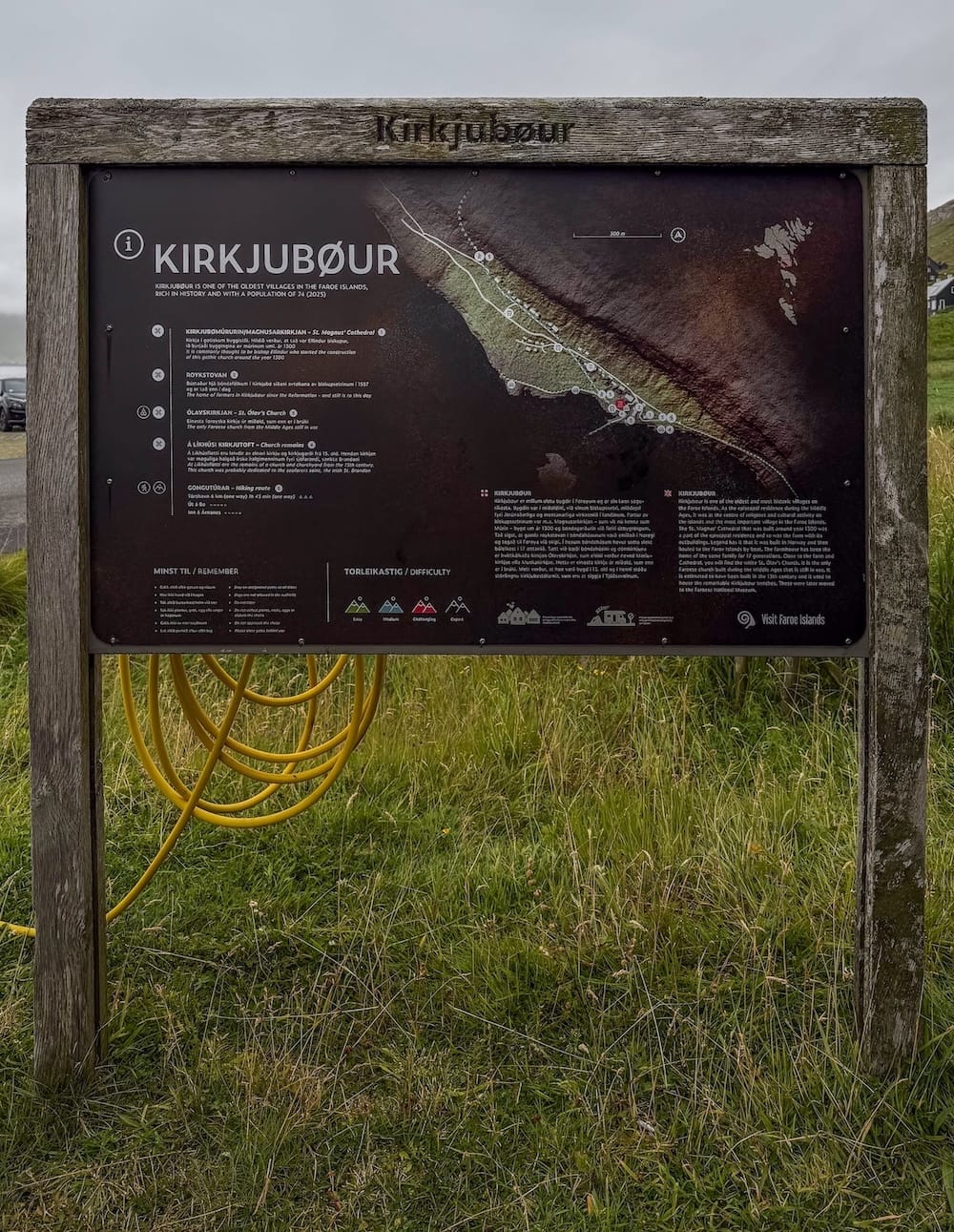
The three key sights are the St. Magnus Cathedral, St. Olav’s Church, and the old farmhouse Kirkjubøargarður. There is also a small islet called Kirkjubøhólmur off the village where you can often see a group of eider ducks hanging out.
St. Magnus Cathedral
The ruins of this never-finished cathedral are situated by the sea in Kirkjubøur. Its initial construction began around 1300 by Bishop Erlendur and was never actually completed because it was never roofed.
Nevertheless, St. Magnus Cathedral remains the largest medieval building in the Faroe Islands.
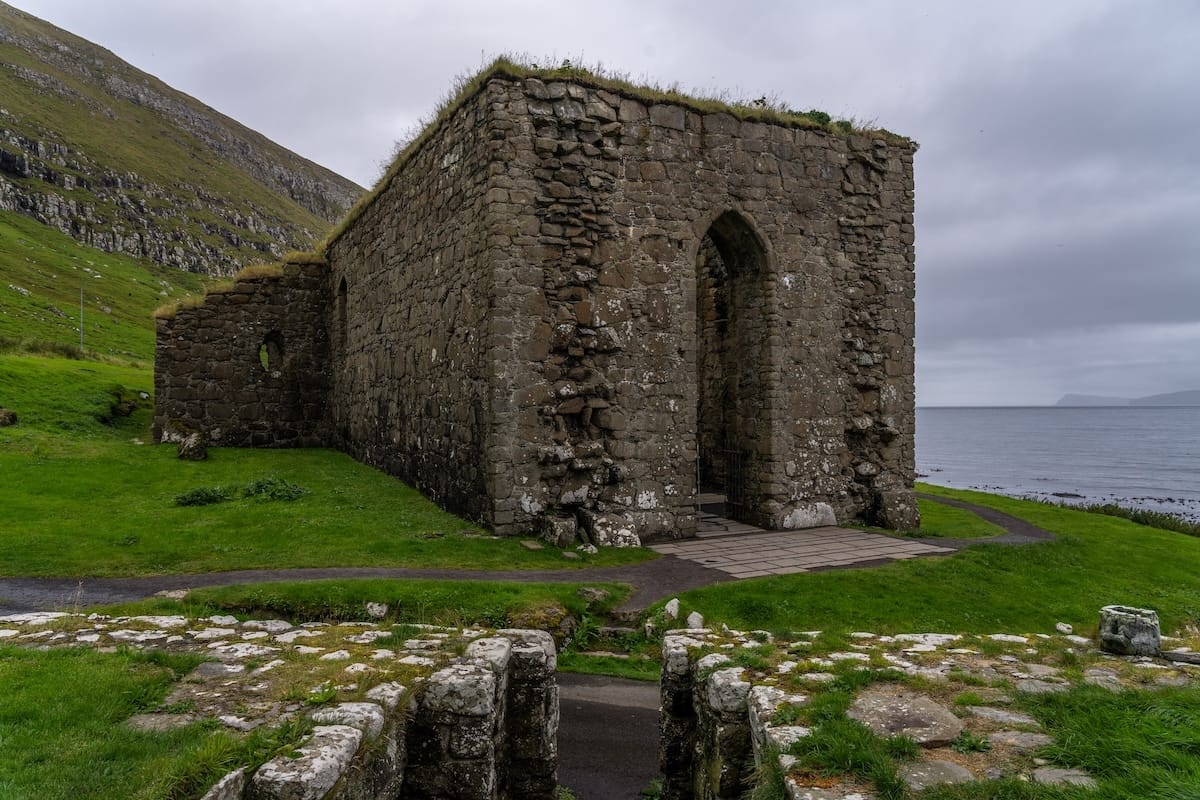
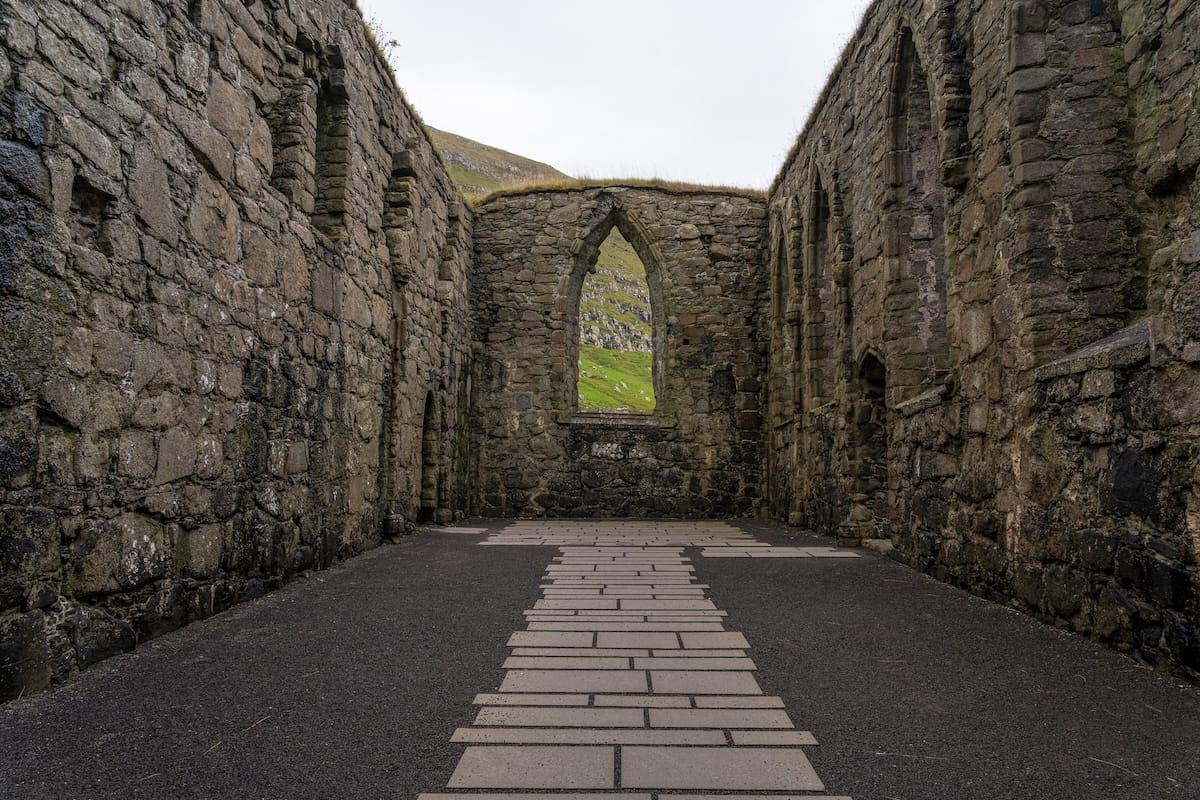
Conservation efforts have been taking place since 1997 on the Cathedral, but have not been completely ongoing. In 2010, however, efforts picked up a bit, and protecting it has become a priority as it slowly wanes as a result of seawater, the wind, and the environment.
St. Olav’s Church
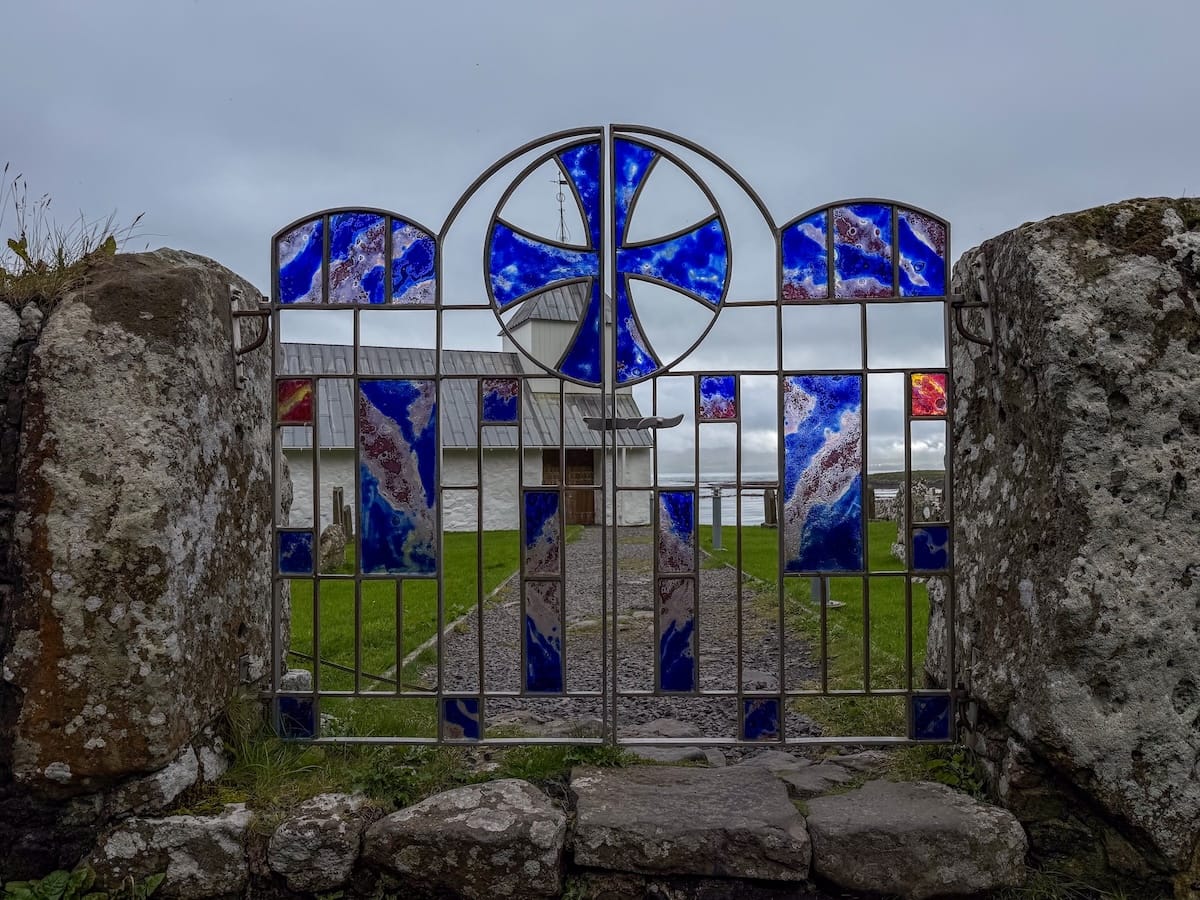
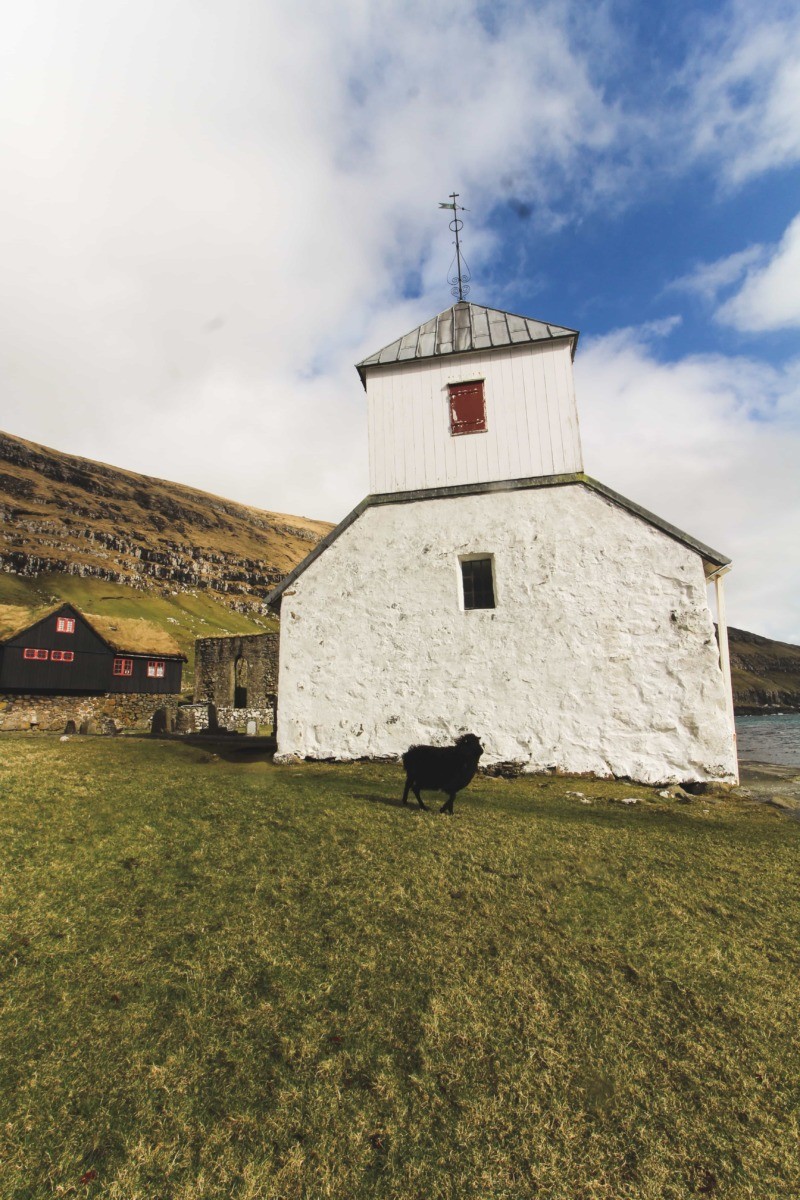
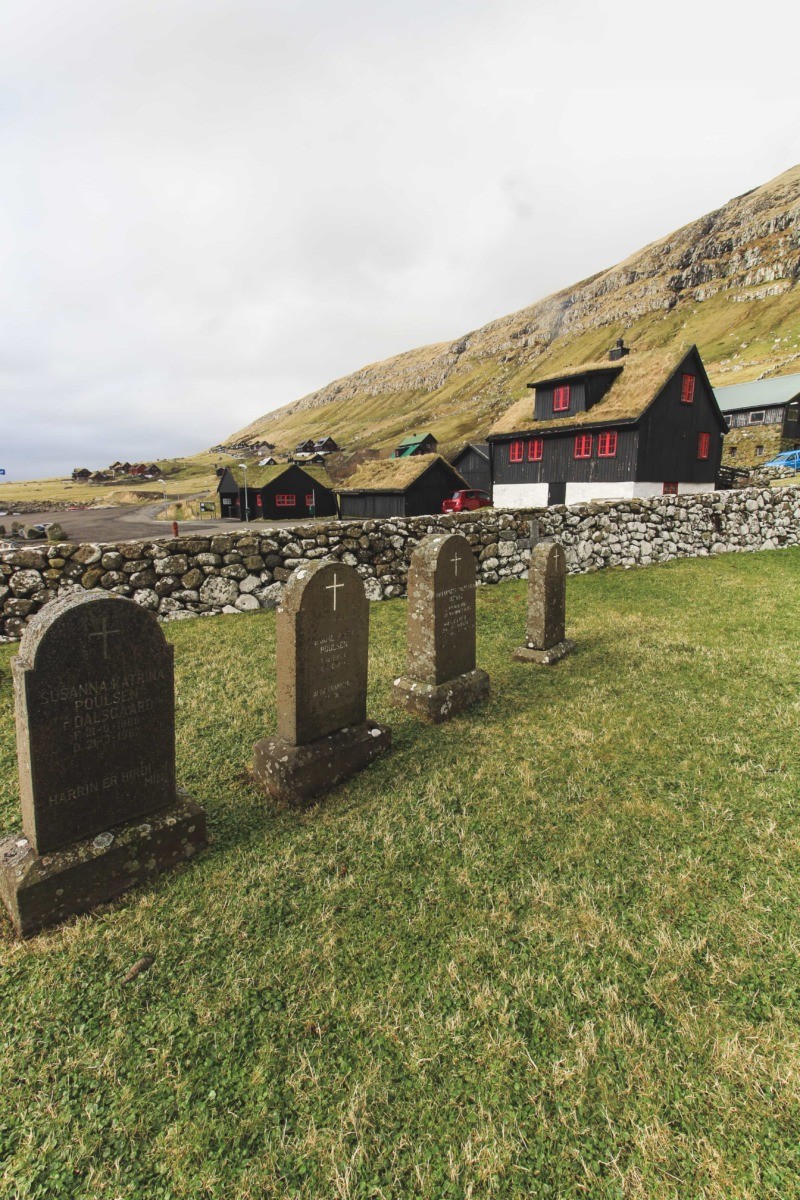
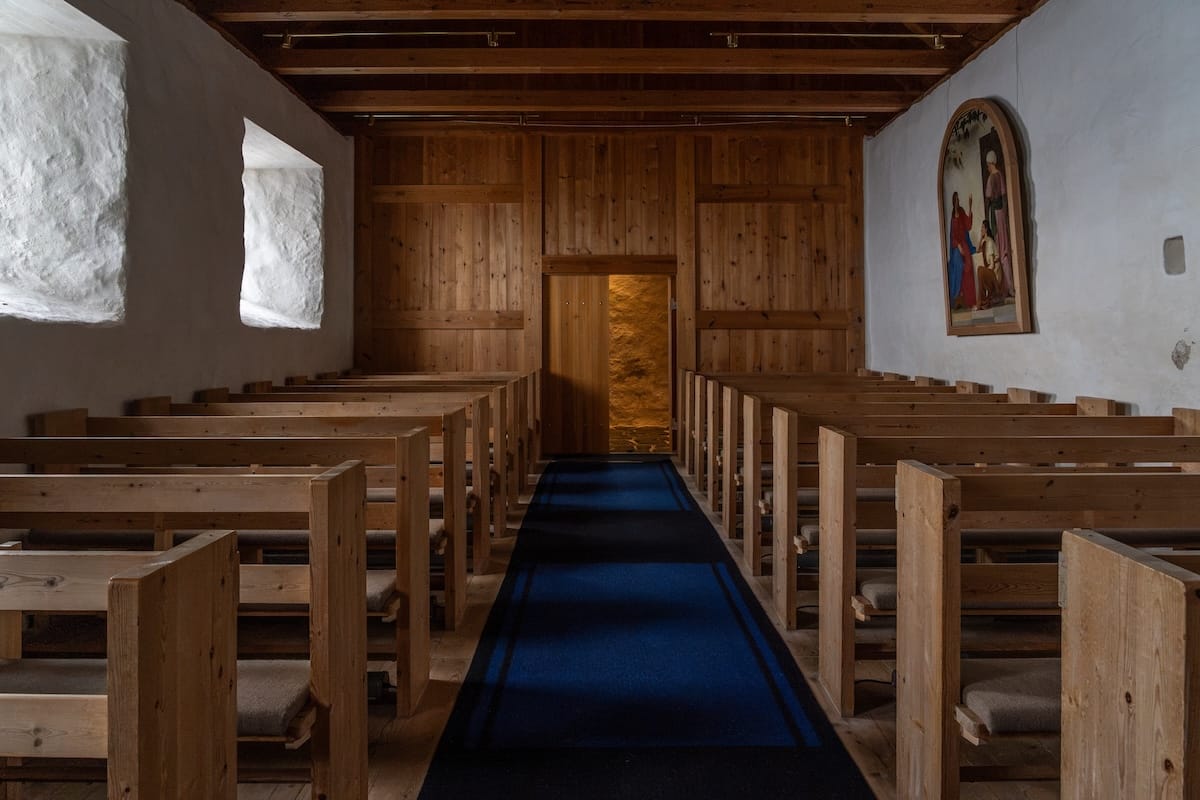
St. Olav’s Church (Ólavskirkjan) is a charming white church dates all the way back to the 12th century and is still in use today, making it the oldest church in the Faroe Islands that is still being used.
Kirkjubøargarður
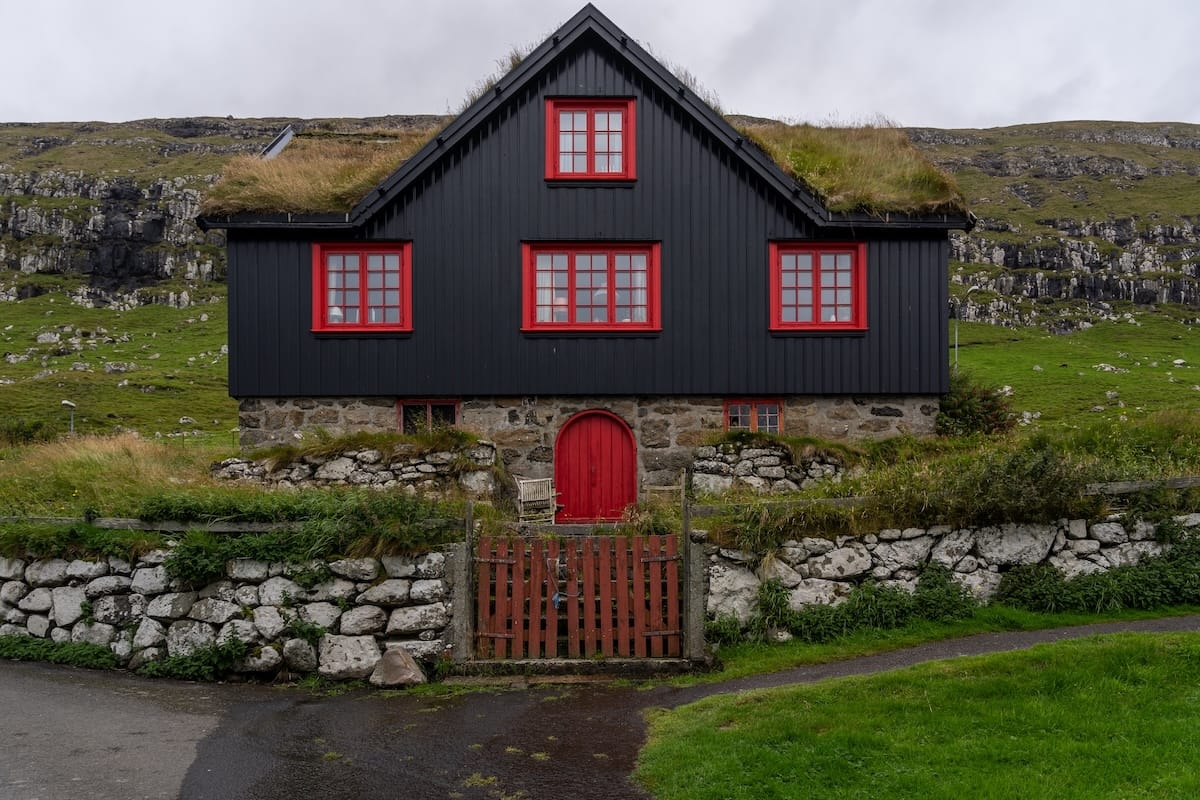
Literally meaning “King’s Farm”, Kirkjubøargarður is one of, if not the oldest, still inhabited wooden houses in the world. Dating back to the 11th century, it was initially used as the episcopal residence and seminary of the Diocese of the Faroe Islands.
There are many legends that surround Kirkjubøargarður, and one of the most noteworthy ones is that the wood for the houses came as driftwood from Norway and was collected, sorted, and arranged to be used as building material. If you know the Faroe Islands, you’ll know that there are no natural trees or forests on the islands, therefore making wood a very valuable and sought-after material.
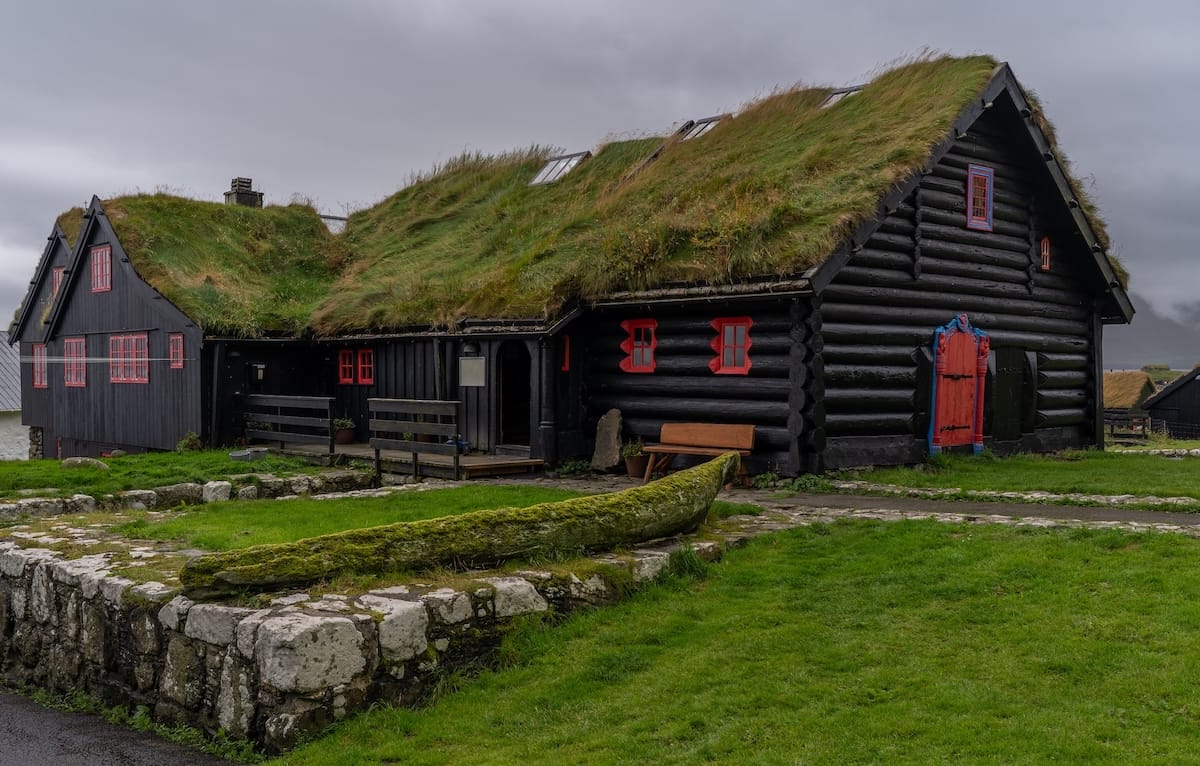
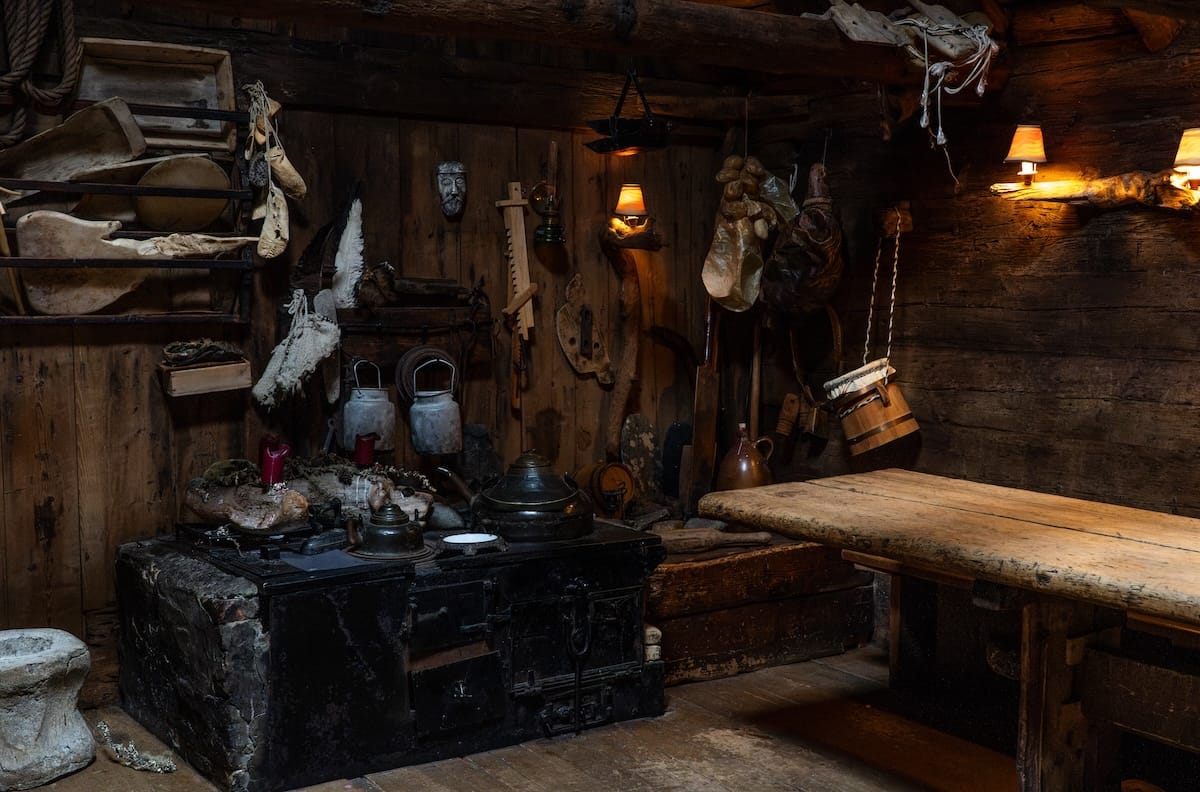
The oldest part of the farmhouse is the smoke room, or roykstova. It doesn’t quite fit with its foundation in its present state ,which has given an indication that it was moved from its original state.
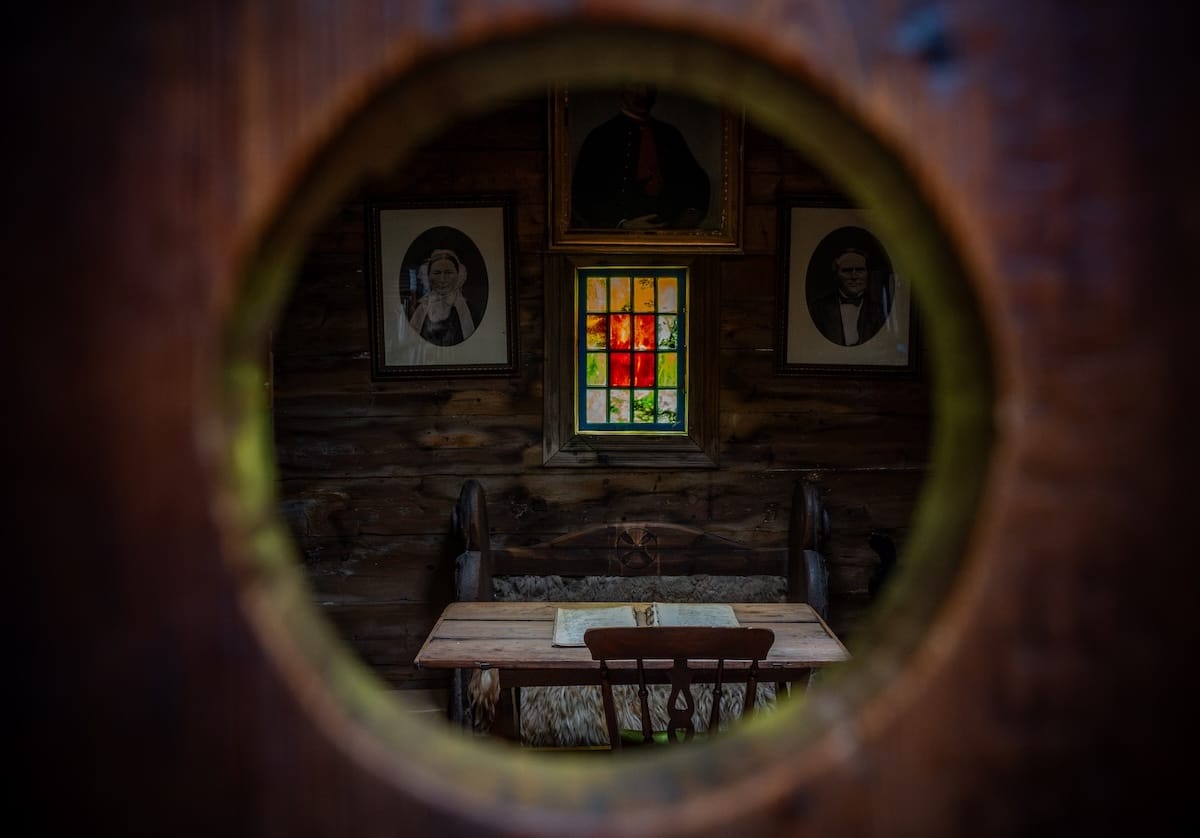
It is also said that Bishop Erlendur wrote the “Sheep Letter” inside Kirkjubøargarður in 1298, which gave us the earliest documentation of the Faroe Islands we know today. Interestingly, the Patursson family, which has been the house’s occupants since 1550, is still living there (the 17th generation!). They have a very cute border collie that I met outside.
Kirkjubøur Ticket Prices & Visitor Center
One of the things I noticed on my most recent trip to Kirkjubøur is that there is a visitor center and ticket required to enter the historic site. Good. This should have been implemented a long time ago as it is taken care of by locals and people are still living at some of the sites they are sharing with travelers.
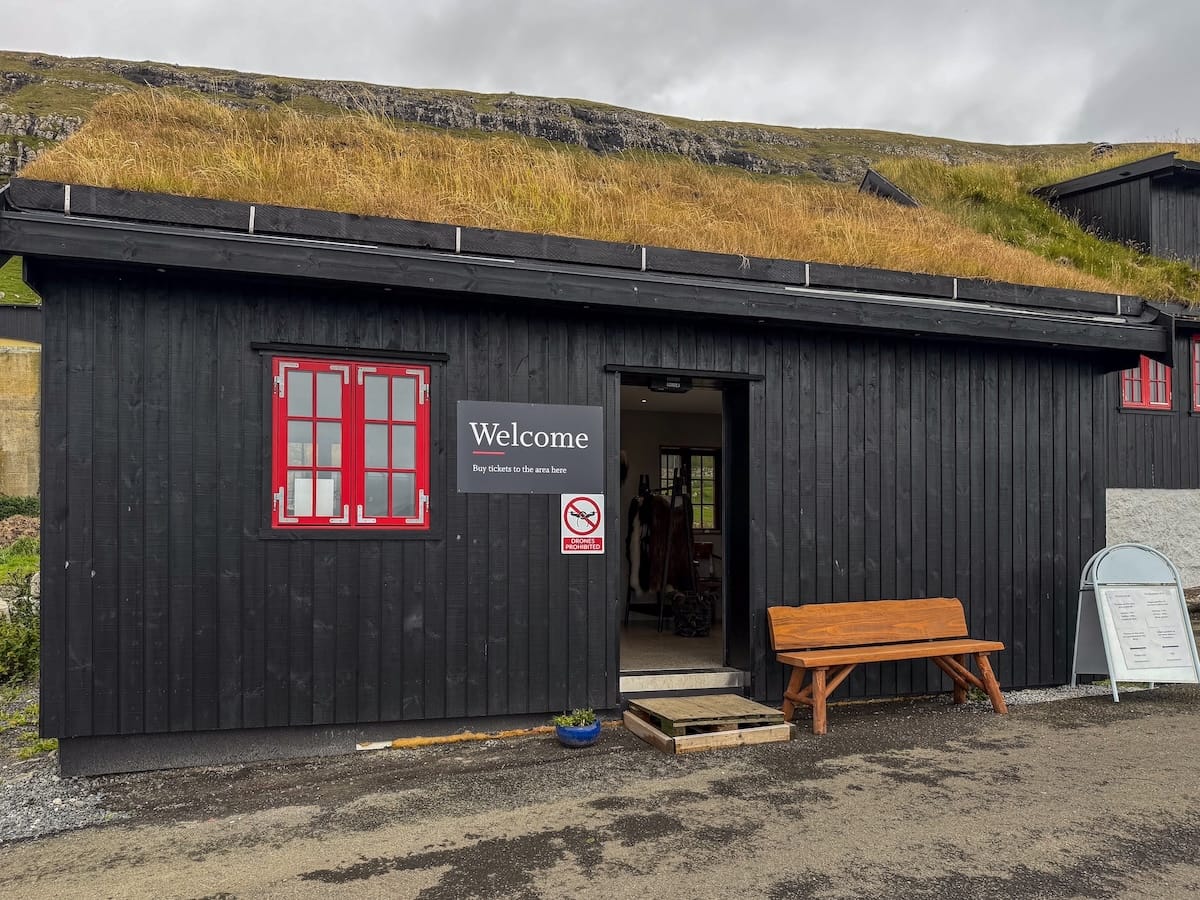
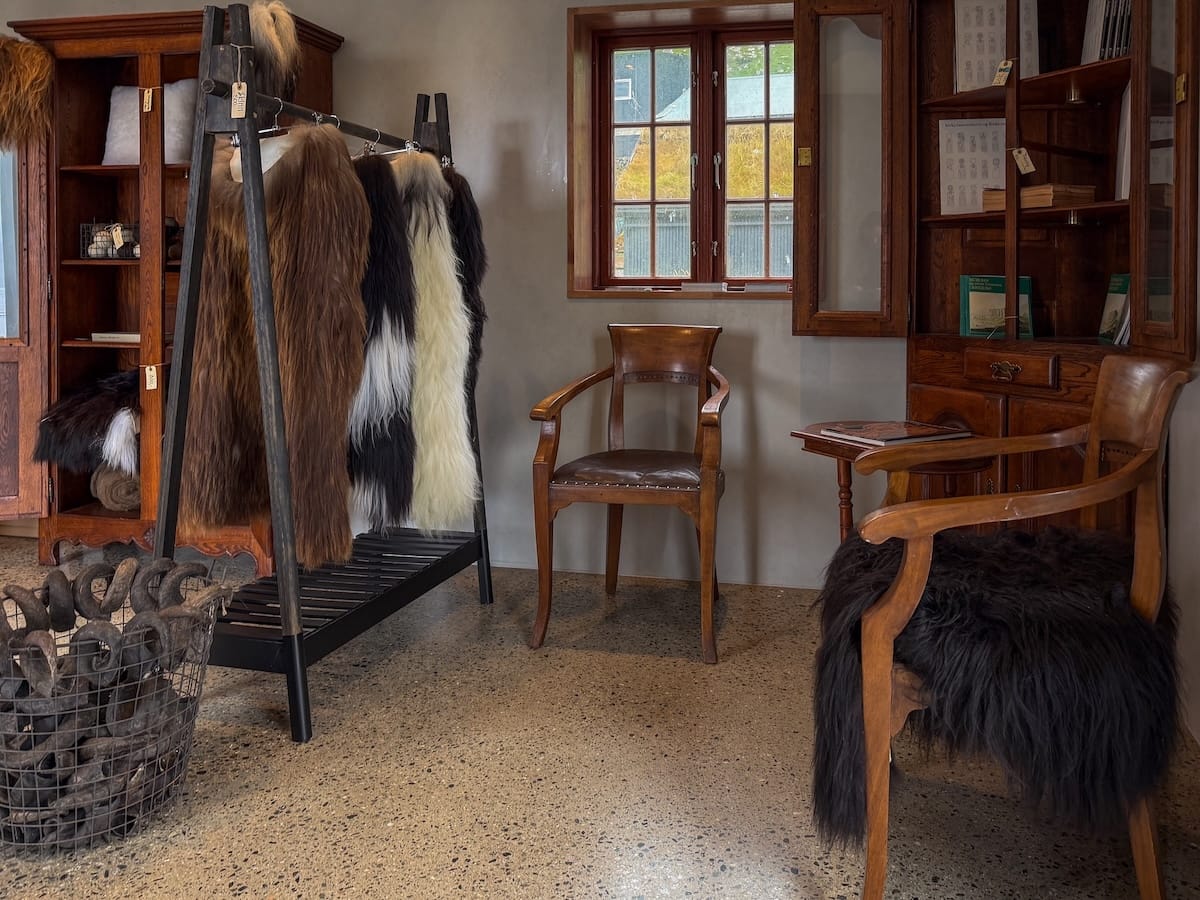
The entrance ticket to Kirkjubøur can be purchased at the visitor center and it is 150 DKK for adults (about $23), 100 DKK (about $15.50) for seniors, and free for children.
Kirkjubøur visitor center is open daily from 7am to 9pm. There is a gift shop, snack bar, and toilets on-site. Card is accepted.
How to Get to Kirkjubøur from Tórshavn
You can get to Kirkjubøur one of four ways really… by tour, car, foot, or bus. Here is some additional information about how to reach Kirkjubøur from Tórshavn.
Kirkjubøur & Sandoy Day Tour
DEPARTS FROM Tórshavn
This full-day tour takes you to iconic spots on Sandoy before heading to historic Kirkjubøur. Will stop at a cafe by the sea for lunch.
Taking a Tour to Kirkjubøur
My first two trips to Kirkjubøur were by rental car so I was excited to finally take a tour there on my latest trip. The tour goes to the nearby island of Sandoy before wrapping up in Kirkjubøur.
Taking a tour there gives you local insight into the village and some background info when you’re at St. Magnus Cathedral and inside Kirkjubøargarður.
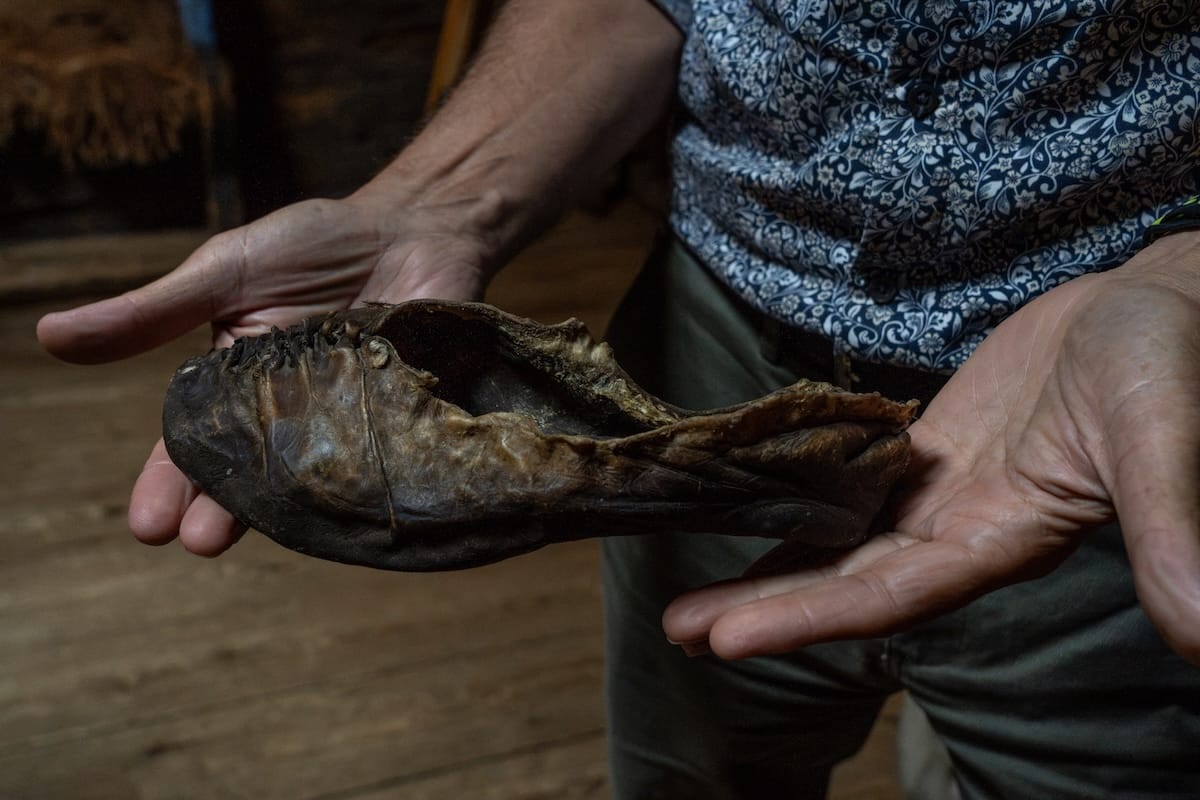
Another perk of taking a tour is that the entrance ticket to Kirkjubøur (150 DKK for adults) is included in the tour so you don’t have to fork out that extra money. Click here to check Sandoy-Kirkjubøur tour prices and availability.
Bus to Kirkjubøur
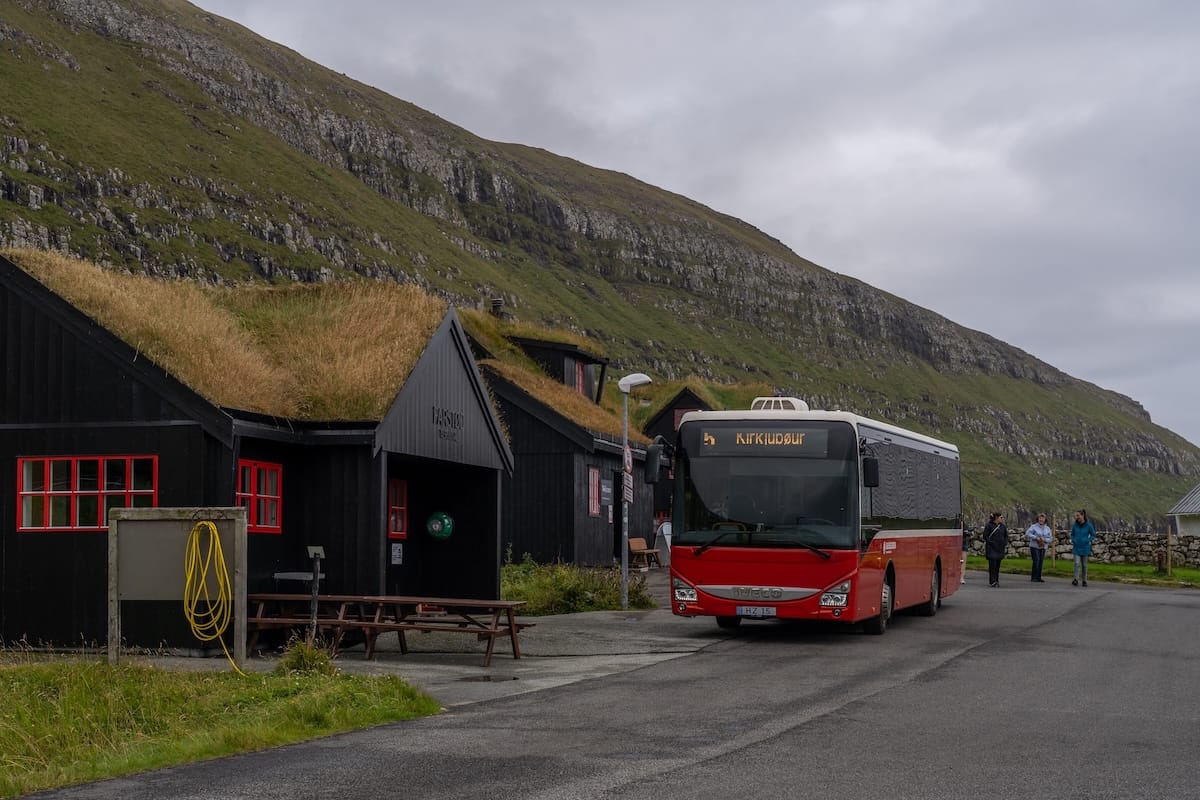
The bus is free, as are all buses in and around Tórshavn.
You can take Bus 5 during the weekdays and Bus 7 on Saturdays (just be sure to take it in the direction of Kirkjubøur). I recommend departing from Steinatún Norður in the city center as it is a central location.
Hiking from Tórshavn to Kirkjubøur
A popular way to reach Kirkjubøur from Tórshavn is to hike there! The hike is listed as moderate and is 6 kilometers (3.7 miles) one way. A lot of people will hike there and take the free bus back (or vice versa). The one-way hike takes around 2 hours and can be muddy along the way. There is an elevation gain of 212 m.
For directions on foot, you can check out these very detailed instructions (and GPX map) from Visit Faroe Islands.
Driving with a Rental Car
If you have a rental car, the village is not far away from Tórshavn as noted above. It is simply about a twenty-minute drive south of the capital city.
You’ll pass the Gamlarætt ferry port on the way, and that will let you know that you’re about five minutes from Kirkjubøur. Once you arrive, there is a large parking lot where you can park (for free so long as you purchase a ticket to see the historical site).
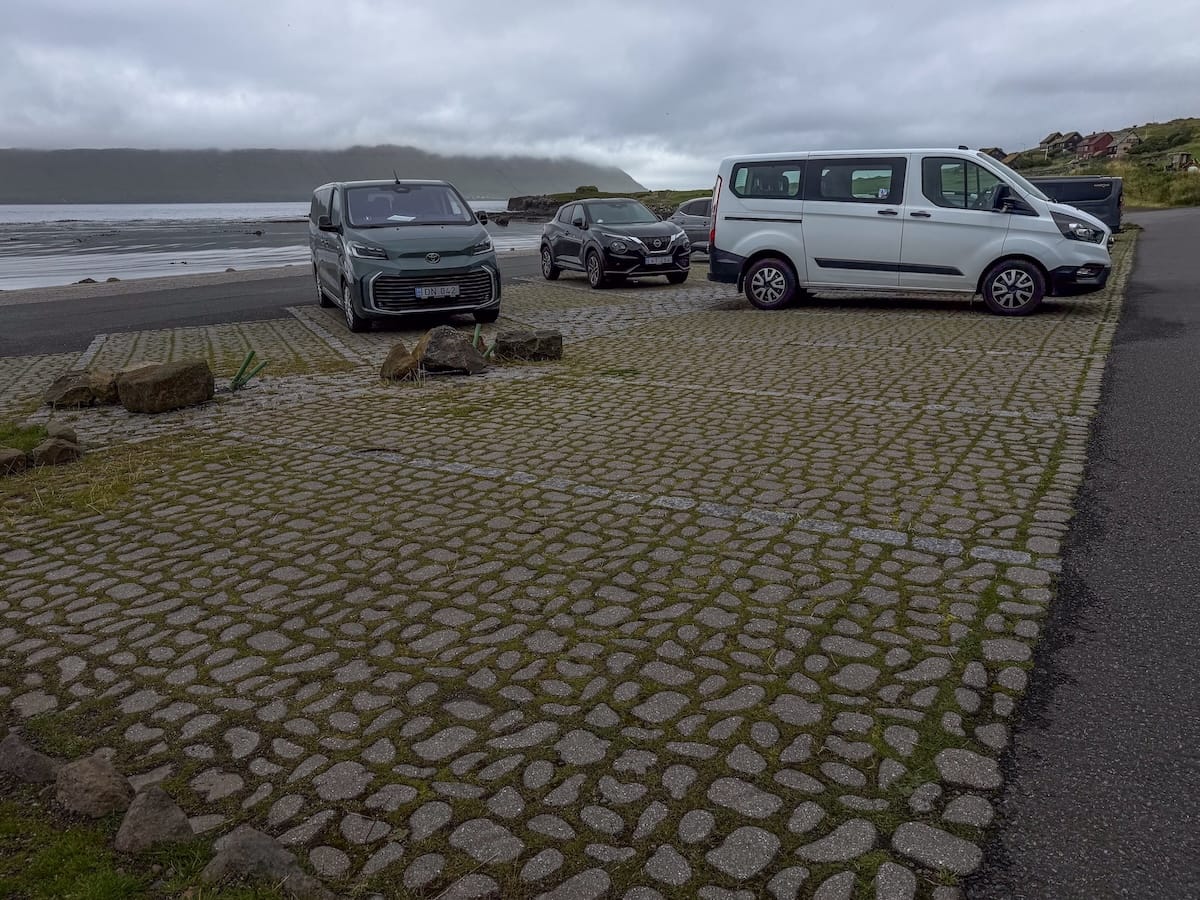
The road to Kirkjubøur is rather narrow and there’s a lot of sheep. Drive cautiously. Click here to check rental car rates in the Faroe Islands.
What to Do Near Kirkjubøur
There are plenty of places, and tours, that you can combine with a trip to Kirkjubøur.
If you’re planning to head to Sandoy, this is a great spot to hit up on the way to or from. Sandoy is now connected to Streymoy by tunnel and it is easier than ever to get there.
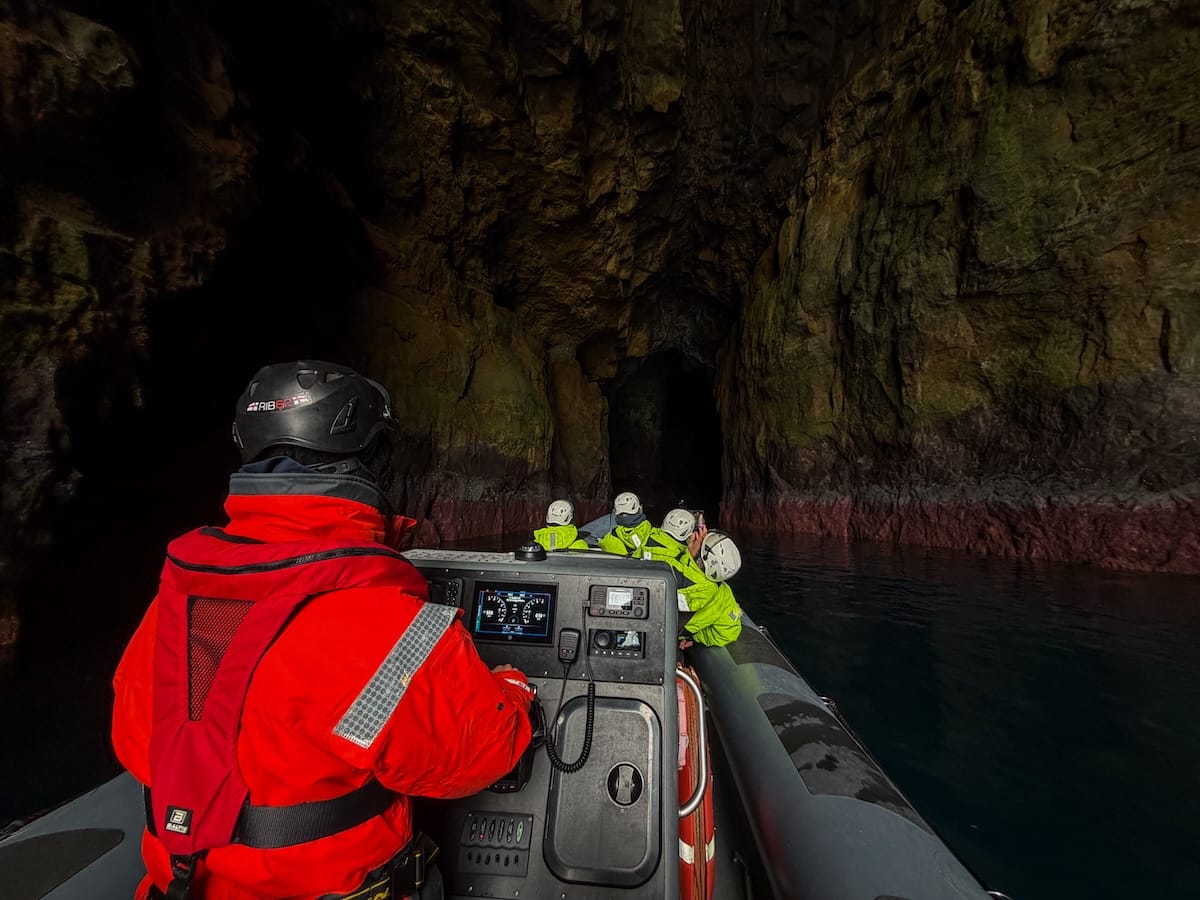
You will also be close to the Gamlarætt harbor which is where two of my favorite RIB boat tours depart from. This trip to Hestur island’s sea caves is one of my favorite things to do in the Faroe Islands. You can also take a RIB boat to Koltur from there.
Both of those RIB boat trips are somewhat short, giving you a chance to combine them with Kirkjubøur.
Visiting Kirkjubøur FAQ
There are some frequently asked questions about visiting Kirkjubøur (and my answers to them).
Is Kirkjubøur Worth Visiting?
Yes, you definitely need to take some time to check out Kirkjubøur. If I had to do it all over again, I would have made the effort to do the hike, but the weather wasn’t cooperating, so I am glad we did end up seeing it via car.
If you have any tips for travelers or questions, please leave them below! Thanks!
Faroe Islands Travel Guides & Resources
Planning Your Trip
Best of the Faroe Islands
Where to Stay
Destination Guides
- Kalsoy travel guide
- Kunoy travel guide
- Sandoy travel guide
- Suðuroy travel guide
- Gjógv travel guide
- Kirkjubøur travel guide
- Tjørnuvík travel guide
Activities & Things to Do
Enjoy this post? Pin it for later!

Looks so lonely and barren, but beautiful in it’s starkness. Love that log cabin, just brings the Vikings to mind. I can’t imagine, must have been a really rough life and I can just imagine how cold it must be in winter with the wind howling in from the North Atlantic.
I remember many years ago visiting Sumatra. We pulled into the shoulder of a road to get a photo of the countryside. There was a dog in that shoulder and he was a bit nervous of foreigners and he slowly walked away from us into the road as we got out of the car…suddenly a car pulls around the corner and runs him over. I’ll never forget that and the guilt that I felt that our presence led to his death. Having said that, sheep aren’t too bright and hopefully someone made a good mutton stew out of it. Just kidding.
Frank (bbqboy)
It was definitely an experience I will never forget :) I would love to take a roadtrip around Indonesia someday! Although I’d surely have a crying fit seeing a poor pup out there. Thanks for the comment, Frank!
That they have no natural trees is something I wouldn’t have considered had you not said anything…it’s one of those things where you look at the landscape and can tell it’s so different and beautiful but aren’t sure what it is. It’s the lack of trees. The most obvious thing.
I love that the descendants of the original family live in that home. I think that’s amazing.
I remember as a kid I was so drawn to the Faroes, Iceland, and parts of Norway and I never, ever could pinpoint why. And it took me like 20 years, but it was the treeless thing. It really isn’t so easy to spot in a photo but you know something is different. Much different than the tree situation where we hail from!
Awww I would love love love to visit the Faroe Islands one day! They come definitely first on my Nordic bucket list and your photos just proof that I should make the trip sooner rather than later! And how amazing is it that you can find SO much history in what essentially looks like the middle of nowhere?! ;)
You will definitely fall in love with the Faroes! Since I know you can handle the cold (haha), I recommend going when the season isn’t high as I can’t imagine how these islands will be able to handle the tourism once it starts at a mass level (and it will- everyone is wanting to go there these days!) My next stop is hopefully Greenland- with much inspiration from you!
I loved this one girl! Your pictures are getting me ready for my trip next month.
I think my cousin mentioned she wants to do this hike as it’s only around 1.5 hours, am I right? Tell me, did you do a lot of the historical research before you went, were the landmarks signed with information or did you have to do the research after the trip? Just wondering how I can best collect and gather my information for the trip. Keep up the good work!
I’m not certain about hike’s length, but I have heard it was around 1.5 – 2 hours, so that should be about right. You can always try the hike there and then take a bus on the way back if it takes longer!
In Kirkjubøur there was a bit of historical information on signs (I actually had a photo to put up on here but I didn’t for some reason…) but I already knew a bit of this prior to going as I’ve been reading up on the Faroes since I was a young girl. But I try to do a bit of research prior to traveling just to make sure I don’t miss out on something (which I often do) and because I usually make a Google map of the things I want to hit up in a destination. I am not a museum person, so I try to get my fix elsewhere and it requires a bit of research.
Very stoked for your upcoming trip! You’re going to love the Islands!