

13 Things to Do in Bukhara, Uzbekistan (+ What to Skip!)

This site uses affiliate links, meaning that if you purchase through my links, I may earn an affiliate commission, at no extra cost to you.
Are you heading to Uzbekistan soon and are looking for the best things to do in Bukhara?
In this guide, I will walk you through all the top sites, including some can’t-miss landmarks, tasty restaurants, and other places in Bukhara I enjoyed on my multiple trips.
Quick Bukhara Travel Guide
If you’re traveling to Bukhara at the last minute, be sure you have hotels and tours booked ahead of time. Below are some of my top picks:
🇺🇿 Best cultural workshops and activities from Bukhara:
- Plov masterclass in a traditional workshop (beautiful location!)
- Suzani embroidery workshop (organized by Craft&Culture, my fave company in UZ)
- Miniature painting workshop (another top-seller from Craft&Culture)
🛌 Top hotels and lodging in Bukhara:
- Duston Boutique Hotel (where I like to stay in Bukhara, near historic sites)
- Bibi-Khanym Hotel (beautiful, woman-owned hotel in the city)
- Rayhon Boutique Hotel (affordable option close to main sites)
Throughout this guide, you will see details about what to do in Bukhara, which includes a mix of madrasahs, mosques, restaurants, and historic spots. I also share insider tips and ticket prices for each place worth visiting.
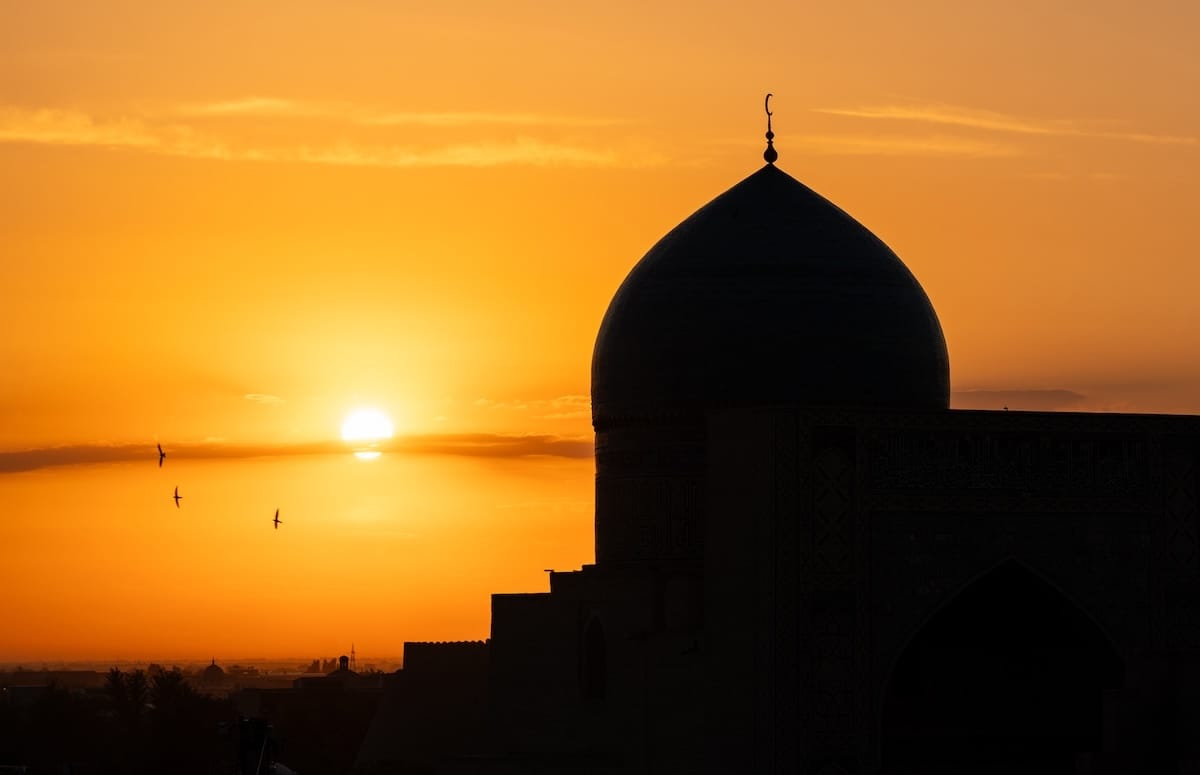
At the end of the guide, I tell you one place in Bukhara I think may be worth skipping, especially if you’re short on time in the UNESCO city. That is followed by some answers to frequently asked questions about Bukhara.
Do you have any questions about things to see in Bukhara? Or did I miss any essential spots? Let me know in the comments… thanks!
First Things First: Should You Book a City Tour of Bukhara?
I’m going to be straight to the point here… YES. Bukhara is teeming with important Silk Road and Islamic sites, and it is really hard to digest everything on a one- or two-day trip of the city. I think having a city guide allows you to understand what you’re looking at and distinguish between the landmarks more easily, as you have the details as to what makes each unique.
I had the best guide named Kamilla, who is local to Bukhara. She spoke amazing English and made my city tour interactive and fun. Her prices will depend on the group size, but it is very affordable, and you can quote a rate with her via WhatsApp at +998 97 300 69 99.
Okay, now let’s get into what to do in Bukhara for first-time visitors!
Best Things to Do in Bukhara
1. Hang out at Bukhara’s most famous square, Po-i-Kalyan.
Po-i-Kalyan Square is probably the most iconic place to visit in Bukhara, which is why I am listing it first on this guide. In the square, you will find the Kalyan Mosque, Kalyan Minaret, and the Mir-i-Arab Madrasah, all of which are must-visits in Bukhara.
Kalyan Mosque dates back to the 15-16th centuries and has a large courtyard inside surrounded by domes (called toqi) and can hold up to 10,000 people inside for worship. From the inside, you can get jaw-dropping perspectives of the Kalyan Minaret and Mir-i-Arab.
Entrance is currently 15,000 UZS, and women must cover their heads and dress modestly to visit. Men also must cover their legs (they have cover-ups there).
Mir-i-Arab is a madrasah that sits across from the Kalyan Mosque and dates back to the 16th century. I am so gutted that I haven’t been inside as it was closed for renovations on all three of my trips to Bukhara. I do believe it has reopened, however.
Po-i-Kalyan comes to life at night. While I prefer it less crowded and in the mornings, the place becomes a party after dark. Each landmark is illuminated and worth a stop for photos.
2. Check out the madrasahs in the historic center.
I considered listing all of these separately in this guide but think the city center ones are better lumped into one. Madrasahs are Islamic education hubs where students come to learn subjects like theology, Arabic grammar, Islamic law, and more.
It is kind of the Oxford of the Islamic world. Anyway, madrasahs dot Bukhara’s historic center, and many of them are worth visiting, even though some have transformed into something else on the inside these days.
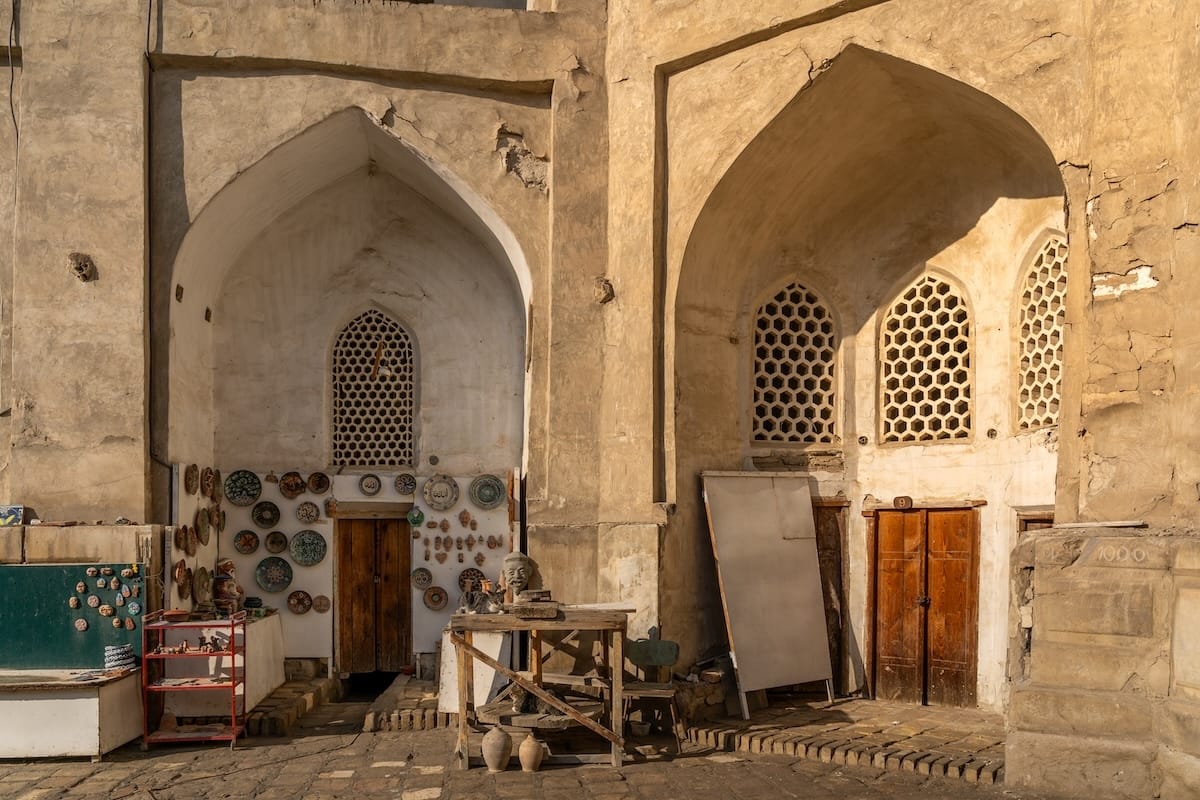
A few notable madrasahs in Bukhara worth visiting are:
- Ulugbek Madrasah (sits across from Abdulaziz Khan)
- Abdulaziz Khan Madrasah (entrance tickets for the mosque and courtyard are separate and are 20,000 UZS and 15,000 UZS each; has gorgeous Persian structural elements)
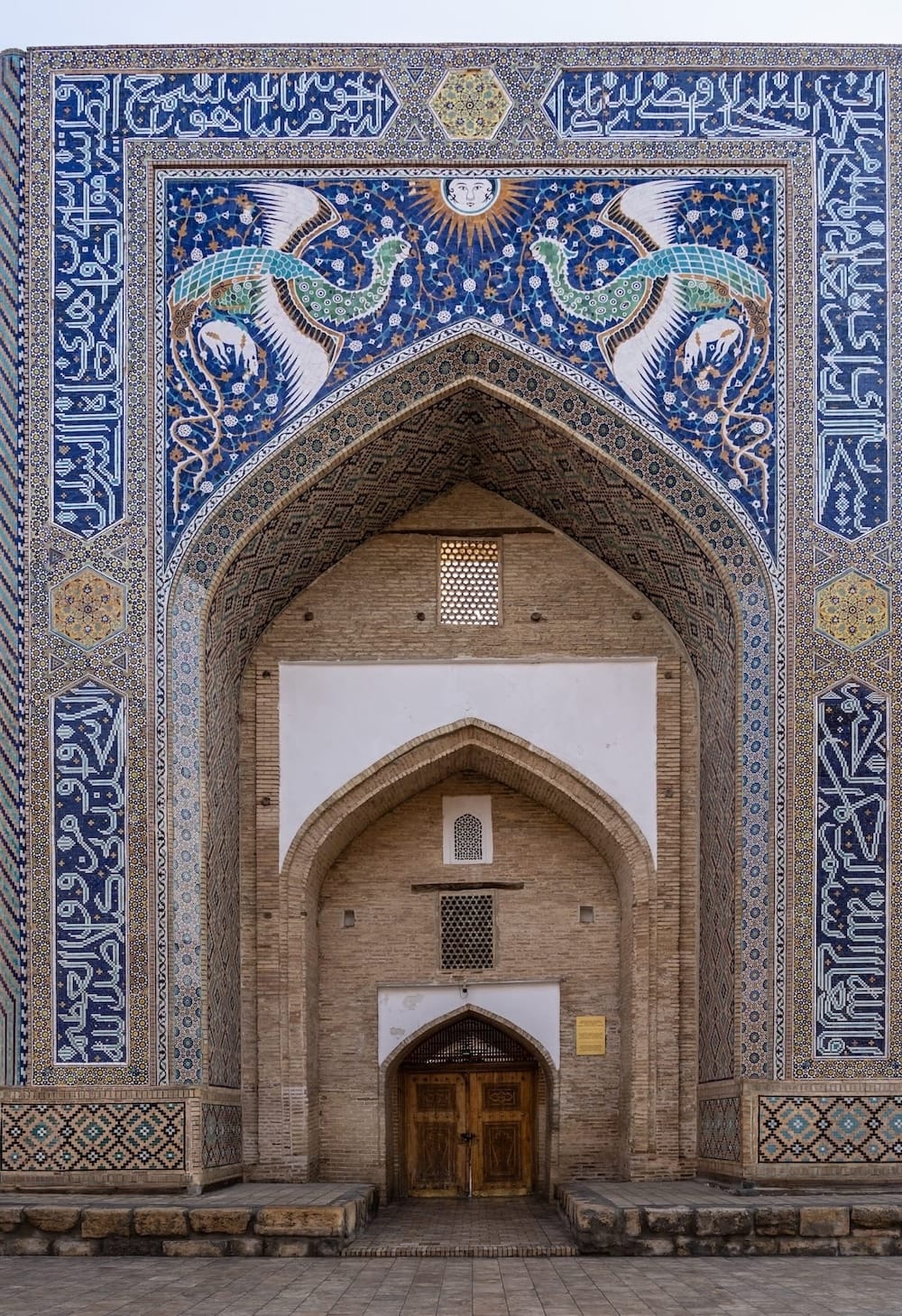
- Nadir Divan-Beg Madrasah (built by Shia Muslims and has the famous simurgh birds on it; mostly just vendors inside today)
- Kukeldash Madrasah (Bukhara’s largest madrasah and is situated at the popular square, Labi Havuz)
Most madrasahs are not working these days, and women don’t need to cover up unless there is a mosque inside one (like Abdulaziz Khan).
3. Sign up for a food masterclass or cultural workshop in Bukhara.
Something that Uzbekistan does so well compared to its Central Asian counterparts is offering workshops and masterclasses, giving you in-depth insight into the food and crafts of the country. No place does it quite as well as Bukhara, so I think one of the best things to do in Bukhara is to sign up for one!
I took three different workshops and masterclasses in Bukhara: miniature painting, suzani making, and a plov cooking class. But there are tons!
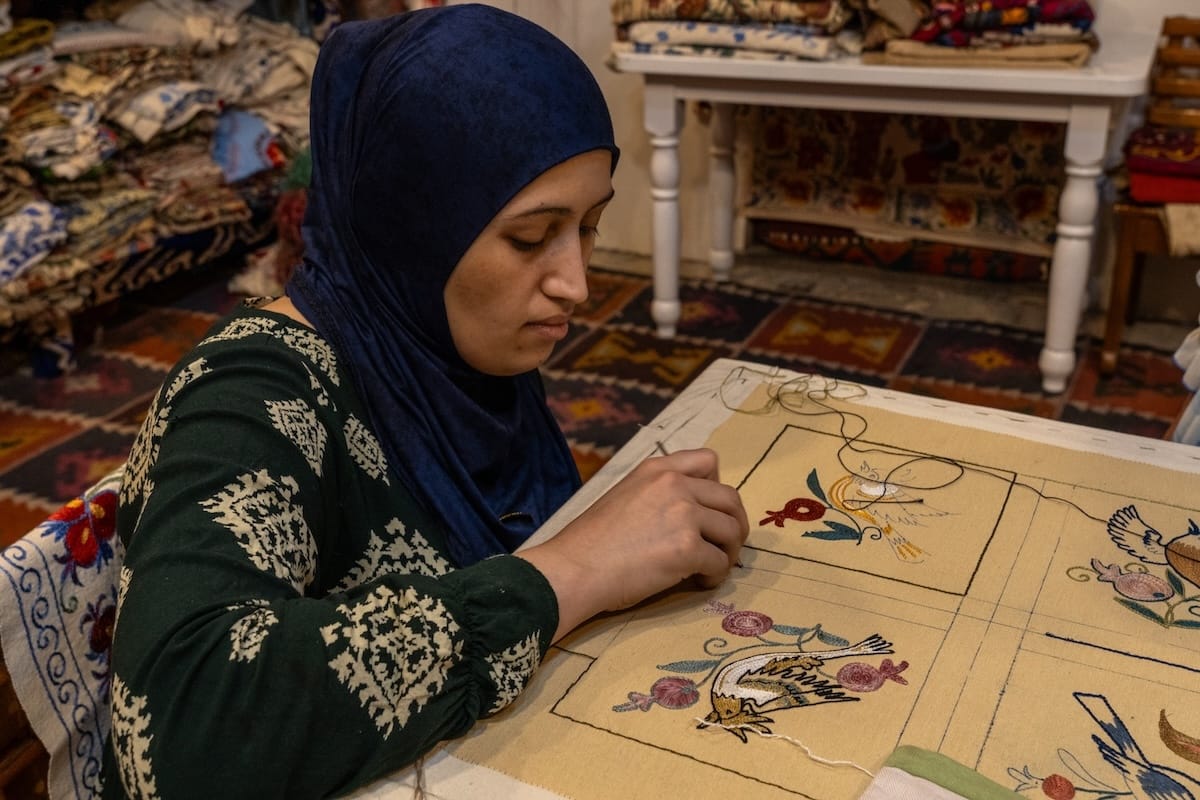
Here are some of the workshops in Bukhara worth signing up for:
- Plov masterclass (this takes place in a beautiful workshop)
- Suzani-embroidery workshop (this also takes place in a different part of the aforementioned studio)
- Miniature painting (I loved learning more about this art that you will see all over the streets of Bukhara)
- Wood carving (I took a wood carving masterclass in Khiva, so I skipped it here, but I enjoyed it)
- Pottery workshop (they actually drive you to a nearby village called Gijduvan to do this)
All of these are with Craft&Culture, an Uzbek company run by two friends of mine who work with local artisans to offer these rich experiences to visitors.
I definitely think that signing up for a workshop in Bukhara is a good way to learn more about the city a bit more deeply and support the local artisans. You also get to keep what you create (provided it is not plov, which you get to eat on-the-spot!), so it is a good souvenir to bring home.
4. Stop by the Bolo Hauz Mosque.
The Bolo Hauz Mosque is one of my favorite places to visit in Bukhara. The colorful mosque was built in 1712, and while it may not be as impressive as the Kalyan Mosque, the location is quieter and supported by 20 carved wooden pillars (40 pillars if you look at the reflection from the pool in front of it).
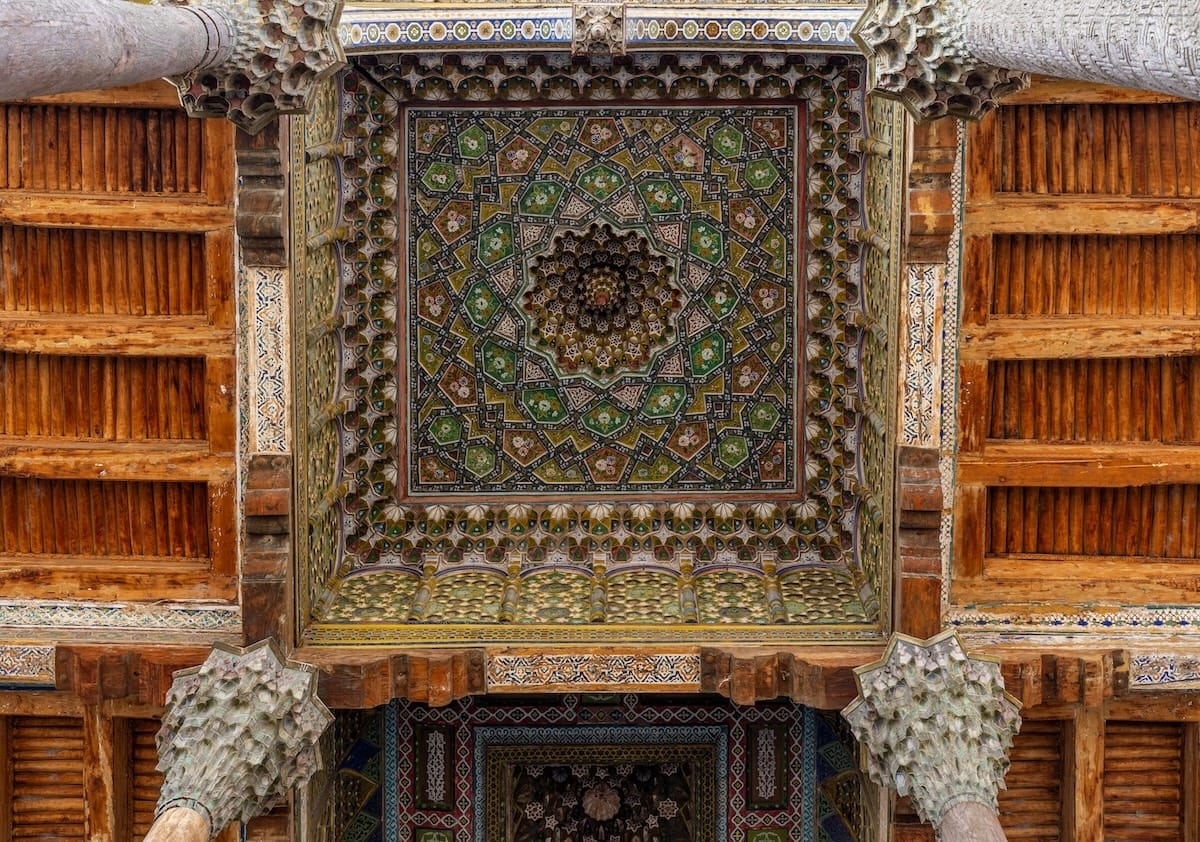
I have never gone inside of it because it is an active mosque and I always seem to visit around prayer times, but I love admiring it from the outside. Don’t forget to look up at the ceiling details when there!
Pro Tip
Right beside the Bolo Hauz Mosque is the Bukhara Tower. You can pay and go up for a view over the city if you wish. I didn’t do this, but if you’re looking for something different than visiting mosques and madrasahs, it may be a good option.
5. Hang out at Labi Havuz at night.
Bukhara comes alive at night… mostly because temperatures during the day are HOT during most of the year. Labi Havuz is a square that surrounds a few pools that is known for its madrasahs (I mentioned a few above) and restaurants.
In Labi Havuz, you’ll want to visit Kukeldash Madrasah from the outside, Nadir Divan-Beg Madrasah, Khanqah Nadir Divan-Beghi, and the shops/restaurants around it.
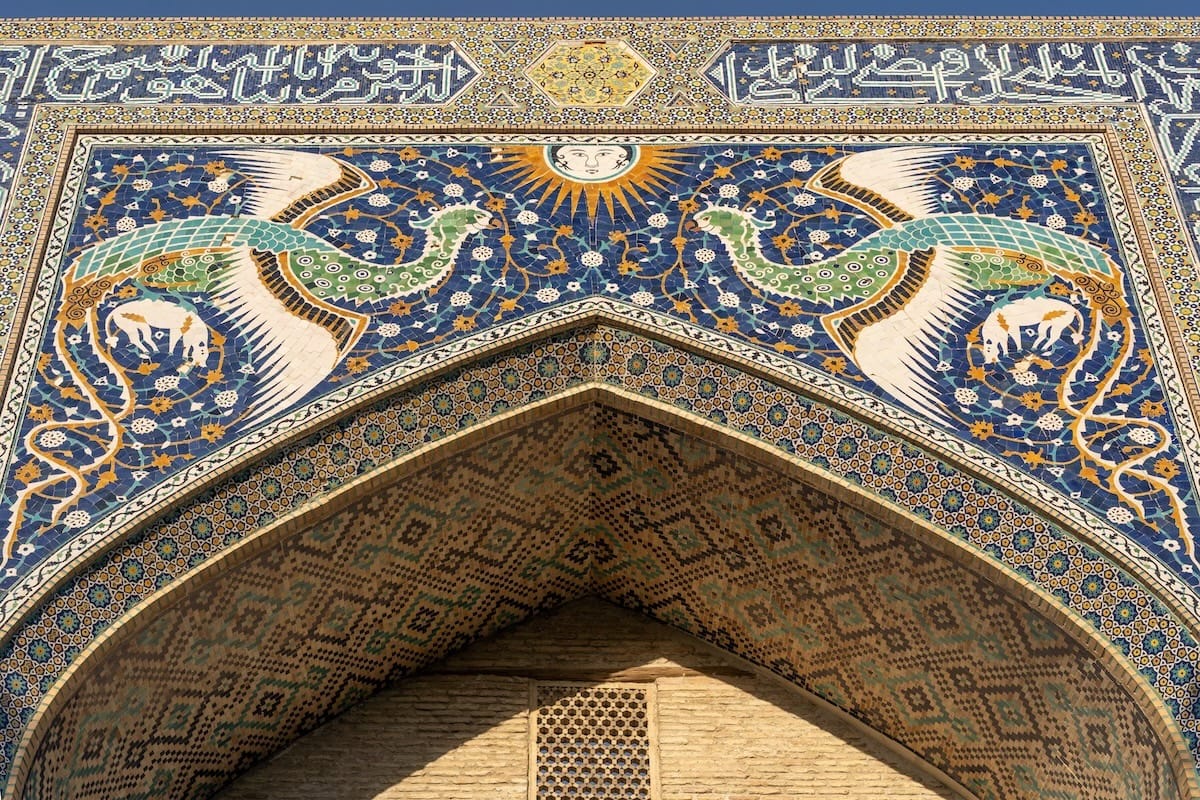
In the area, you will also find Maghoki-Attar Mosque, a place where Bukharan Jews and Muslims worshipped together. It is a very old mosque and was built on top of Zoroastrian remains and Buddhist temples, bringing many layers of history together in one place.
💡 Fun Fact
Genghis Khan burned down Bukhara, so locals put sand around a lot of the buildings there to preserve them. Maghoki-Attar Mosque was one of them, and when it was unearthed during the Soviet era, they found Buddhist, Jewish, and Muslim remains there. Now it is a carpet museum.
6. Try local Bukharan dishes.
You’re in Uzbekistan, so obviously one of the best things to do in Bukhara is eat! And I highly encourage trying some local dishes when you’re there. Here are a few dishes worth trying in Bukhara:
- Balaza: A chickpea soup with meat and veggies in it. Very simple but extremely tasty. Can try it at Xon Atlas and Chinor (outside the historic center).
- Bukharan plov: Also called Oshi Sofi on menus; Bukhara plov is tasty and not overly sweet like other regional variations. Can try it at many restaurants across the city.
- Bakhsh: A green rice and meat dish that is associated with Bukharan Jews. I didn’t see it anywhere, but if you do, order it for sure!
- Bichak: A pocket pastry made in a tandir and is filled with herbs or meat/pumpkin. Can find it in many places, but I saw it at Zolotaya Buhara, Old Bukhara, and Joy.
- Olot samsa: This is a thin pastry filled with dried meat and cooked in a tandir. It comes from a village close to Bukhara. You can find it everywhere.
- Kayish: I only say this is offered at Xon Atlas and Joy. It is a noodle dish with black-eyed peas and diced meat. It is an ancient dish.
- Vaguri: A fried, crispy lamb that is from Bukhara. You’ll see it on several menus and it is served with onions and herbs.
- Bukharan jizz: A local take on a traditional Uzbek dish. You can try the Bukharan rendition at Old Bukhara or Chorbaxosa.
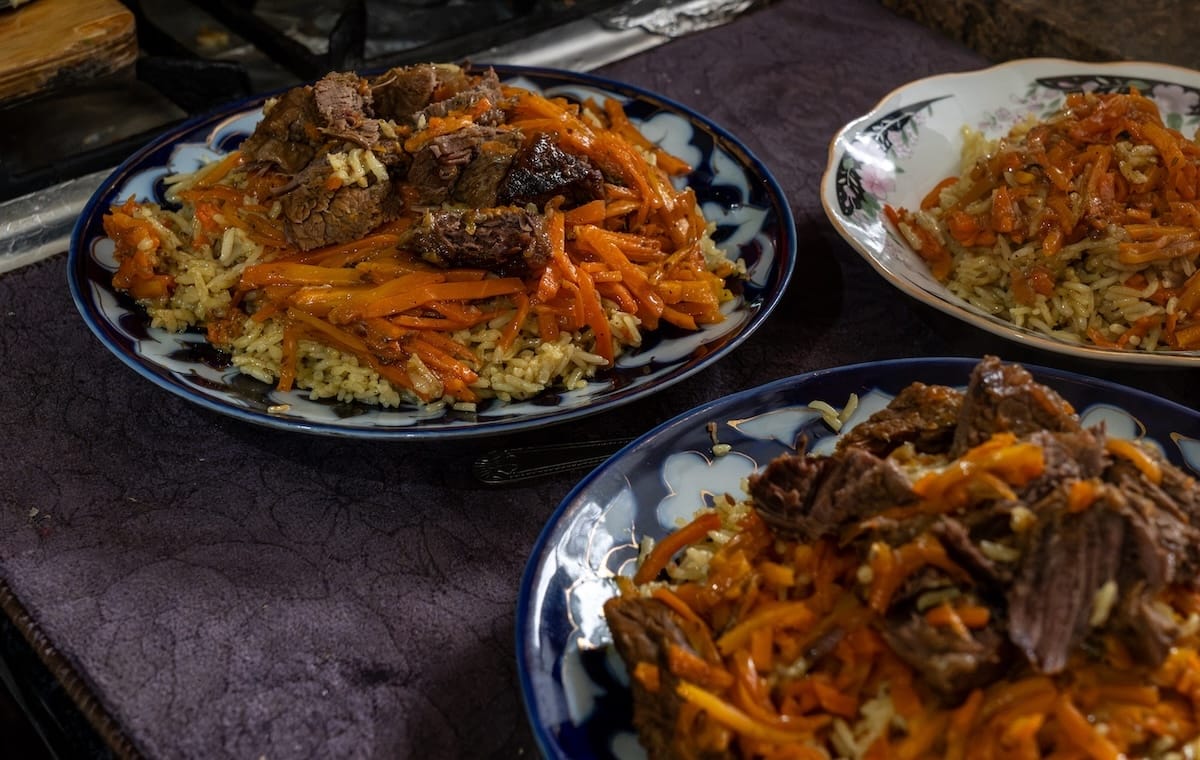
You can even learn to make plov in Bukhara by taking a masterclass with Craft&Culture. I highly recommend doing this on your trip because you also get to eat your creation (which may or may not be tasty depending on your cooking skills!).
7. Take a day trip to Sitorai Mokhi-Khosa (Bukhara’s Summer Palace).
A must for your Bukhara bucket list is a visit to Sitorai Mokhi-Khosa, or the Summer Palace in Bukhara. It is not located in the historic center but outside of it and is reachable by a Yandex Go taxi. I have visited twice and paid just around $2-3 for each taxi ride.
The reason I like Sitorai Mokhi-Khosa is that the architecture and interior are vastly different than other landmarks in Bukhara, and the former summer palace of the emirs of the city has several halls and buildings worth visiting.
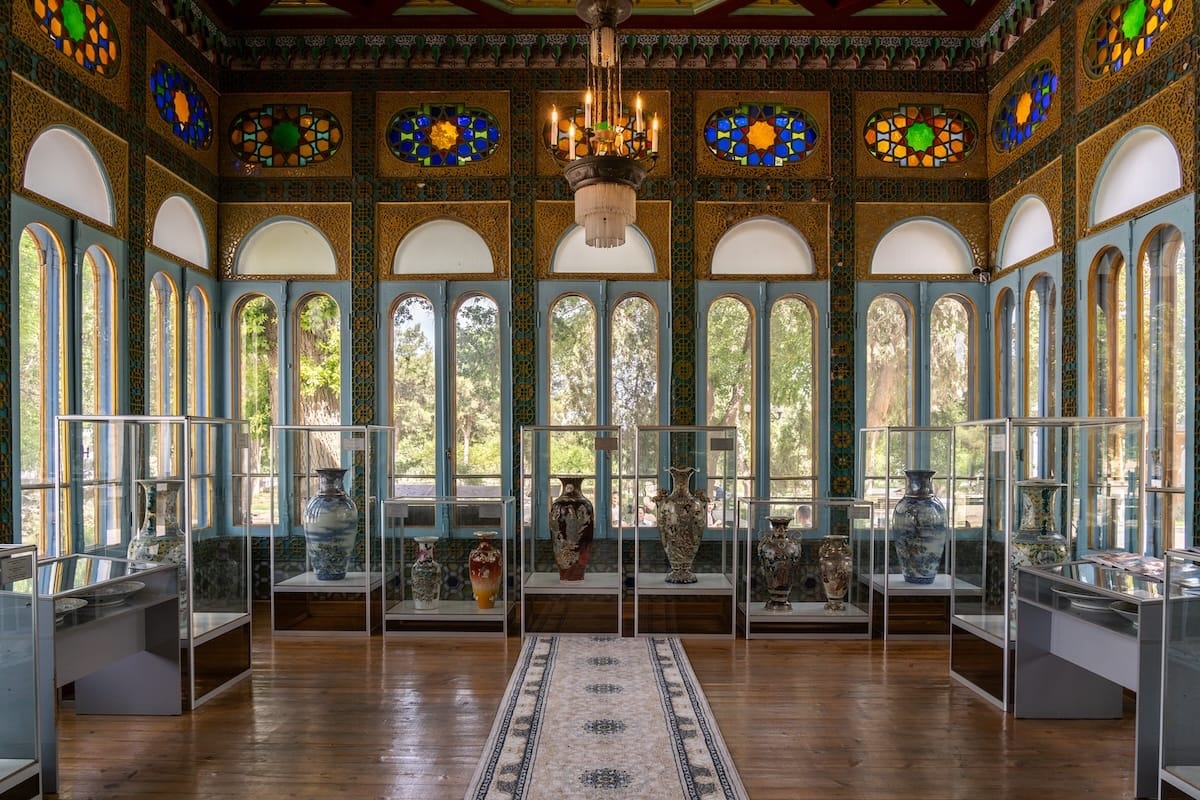
When there, you will see styles fused: a little bit Uzbek, a bit Russian, and a bit Persian. There are peacocks in the gardens and buildings surrounded by courtyards and rose gardens.
To visit Sitorai Mokhi-Khosa, you will pay an entrance fee of 60,000 UZS at the gate. Credit cards are accepted. You only need an hour or two there (not including the taxi ride to get there).
8. Have a nice dinner at a restaurant in Bukhara.
I have written an entire guide to my favorite restaurants in Bukhara here, but I highly recommend making a booking for a nice dinner when there. You can try some of the dishes I mentioned above, but another reason to dine out there is for the views. Many restaurants in the historic center are located in areas with viewpoints or live music.
Here are a few of my favorite restaurants in Bukhara:
➡️ Ayvan Restaurant: Dates back to 1886 and is considered a key piece of Bukharan Jewish heritage in the city. The terrace is so beautiful! They also offer a Bukharan plov for lunch for 55,000 UZS from 12pm to 4pm daily.
➡️ Xon Atlas: This is a fabulous place to try Bukharan dishes. I ate balaza and kayish there, and the views from the restaurant are also pretty impressive.
➡️ Minorai Kalon Restaurant & Terrace: Easily the restaurant with the best view in Bukhara! Go around 7pm (make a reservation) and you can watch the sunset from the terrace, which offers a view over Mir-i-Arab and the Kalyan Mosque. Their menu wasn’t my favorite (but the food was delicious), but the views made it all worth it.
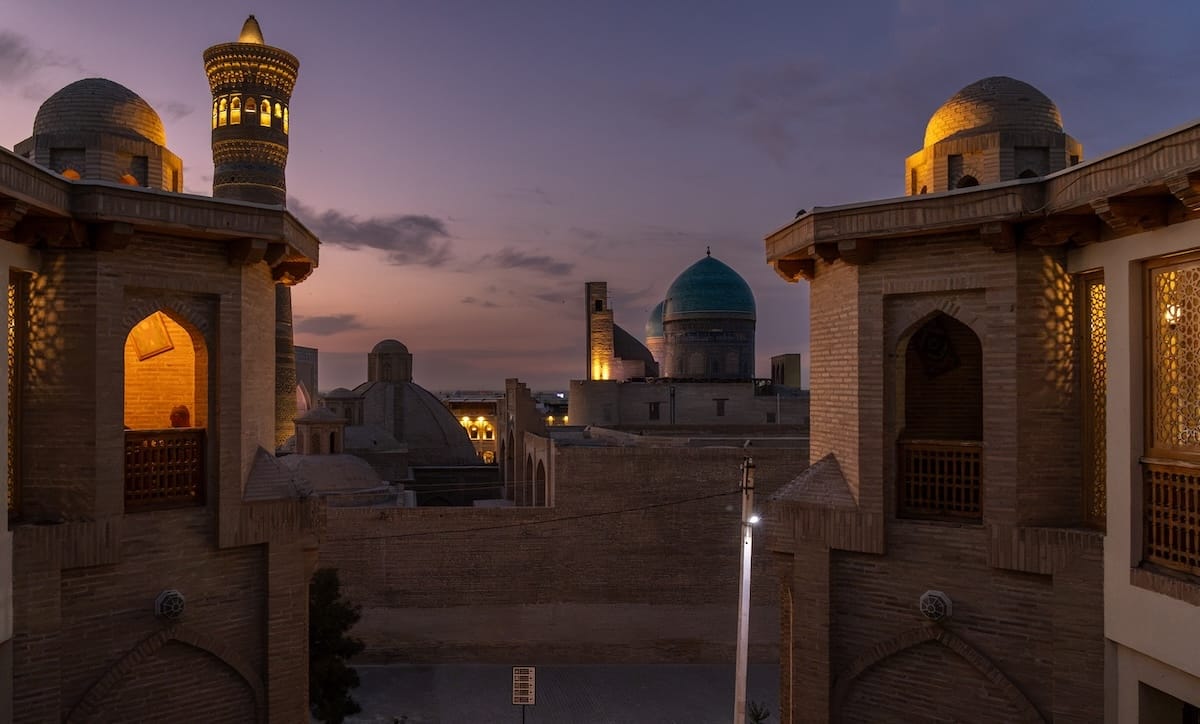
➡️ Joy Chaikhana Lounge: This centralized restaurant offers several dining areas and local fare. You can try soups like balaza and mastava here, as well as vaguri (the fried lamb dish I mentioned above).
One thing to note is that I would make reservations for places in Bukhara. I linked my restaurant guide above, and each place has a link to where you can do that. Lunch is pretty easy to get a seat at a place, but dinner is not, especially in the high season.
9. Stop into a local cafe or teahouse.
Bukhara’s sun is relentless, so I found it nice to get off my feet a bit at one of Bukhara’s best teahouses or cafes when I could. I wrote a full guide that I just linked, but two places I think are worth mentioning are the Silk Road Teahouse and Pavillon Kalon.
Silk Road Teahouse has been around since 204 and is a family-owned teahouse inside a cool, brick building. For 70,000 UZS, you can grab a large pot of tea and a small array of sweet treats… and you can get off your feet for a bit!
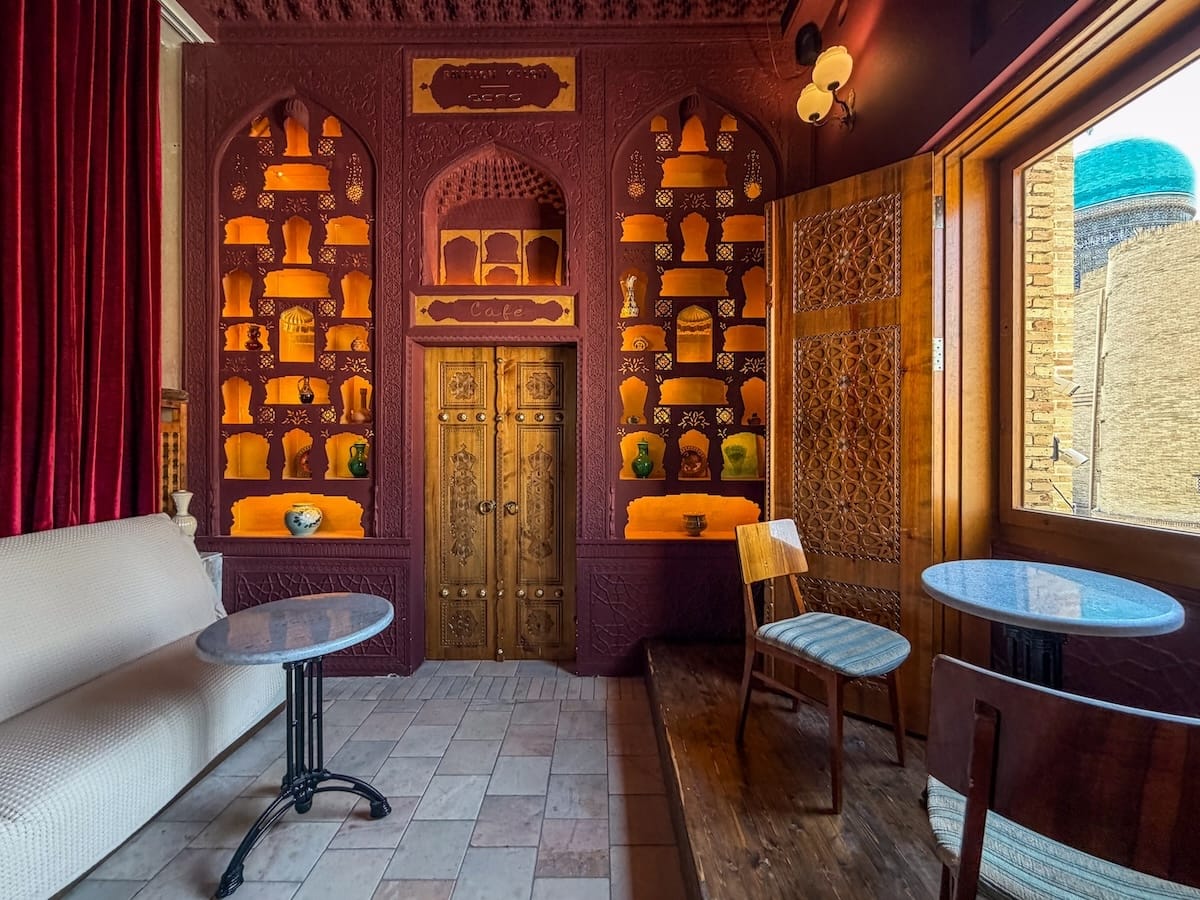
Pavillon Kalon is easily Bukhara’s most photographed establishment thanks to influencers, but they love it for a reason. It really offers one of the city’s best views! You can grab a pot of tea (Bukharans drink green tea) and admire Po-i-Kalyan Square from above. They have an air-conditioned indoor area, as well as a rooftop terrace.
If you’re a coffee lover, give Donuts & Coffee a go. I went there multiple times throughout my trips and enjoyed every visit.
10. Admire Chor Minor’s unique architecture.
After visiting Bukhara’s center, you will notice that many buildings look aesthetically similar and after a while, it can be confusing. This is the time to walk over to Chor Minor. It is a historic gatehouse that served as the entrance to a (now-destroyed) madrasah.
Built in 1807 by Khalif Niyaz-kul, Chor Minor means 4 minarets in Tajik. While it sits kind of by itself in Bukhara, it is a very short walk from the other main sites of the city and is located at Mehtar Anbar Str. 90. It takes around 5-10 minutes to walk that way.
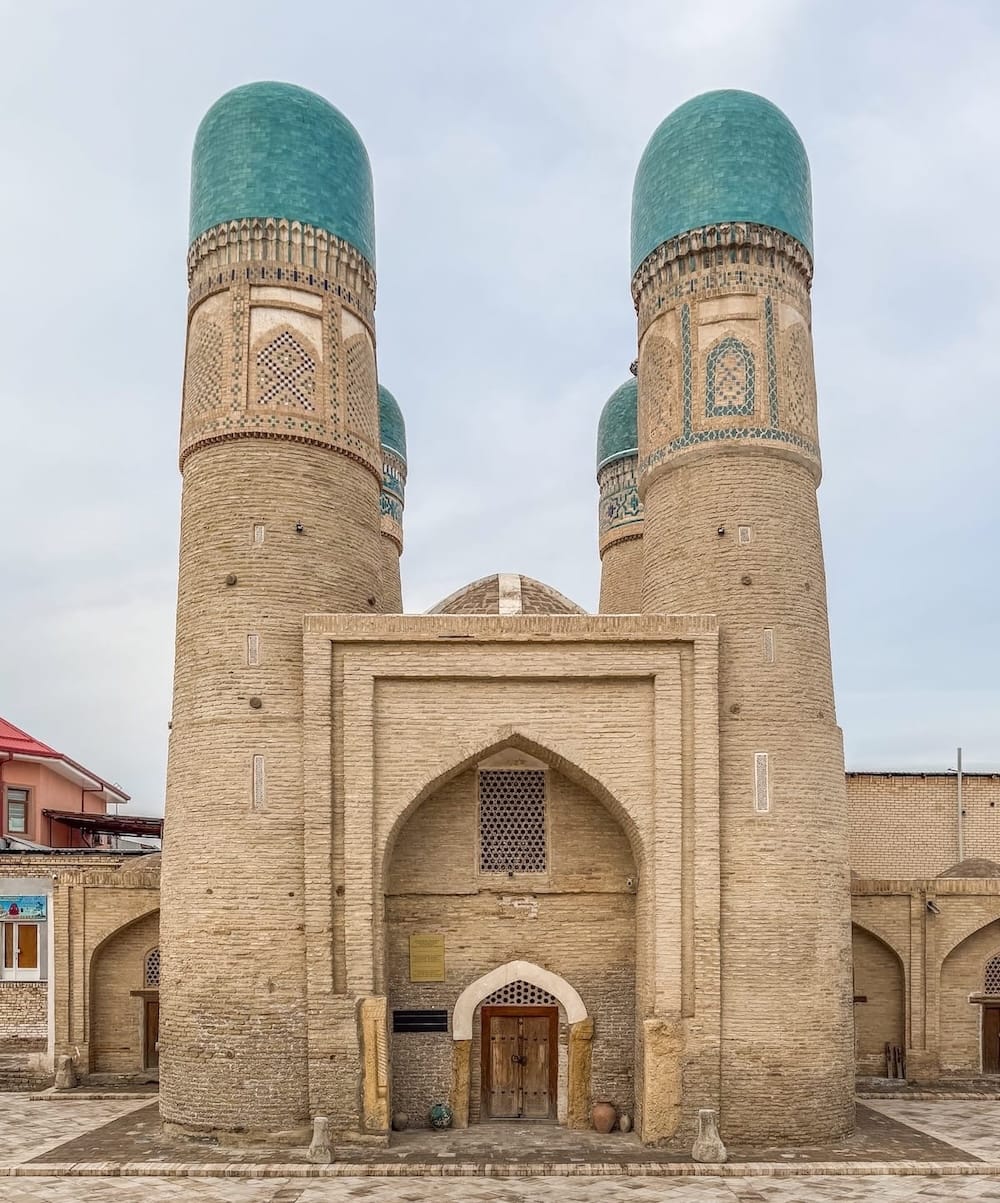
When you arrive at Chor Minor, be sure to also peruse the antique shop and have a to-go coffee at coffeeFi, a small stand run by an enthusiastic barista named Ikram. Their iced latte saved me on a hot day!
11. Cool off at one of Bukhara’s cupolas.
Bukhara is hot, especially from May to September. And I constantly found myself taking shelter from the sun at Toqi Telpakfurushon, one of Bukhara’s four remaining cupolas. Cupolas are trade domes that date back to the Silk Road, but modern structures stand in their place now, and they are built in a way that offers respite from the sun.
The four cupolas remaining in Bukhara today are:
- Toqi Sarrofon
- Toqi Zargaron
- Toqi Abdullakhan
- Toqi Telpakfurushon
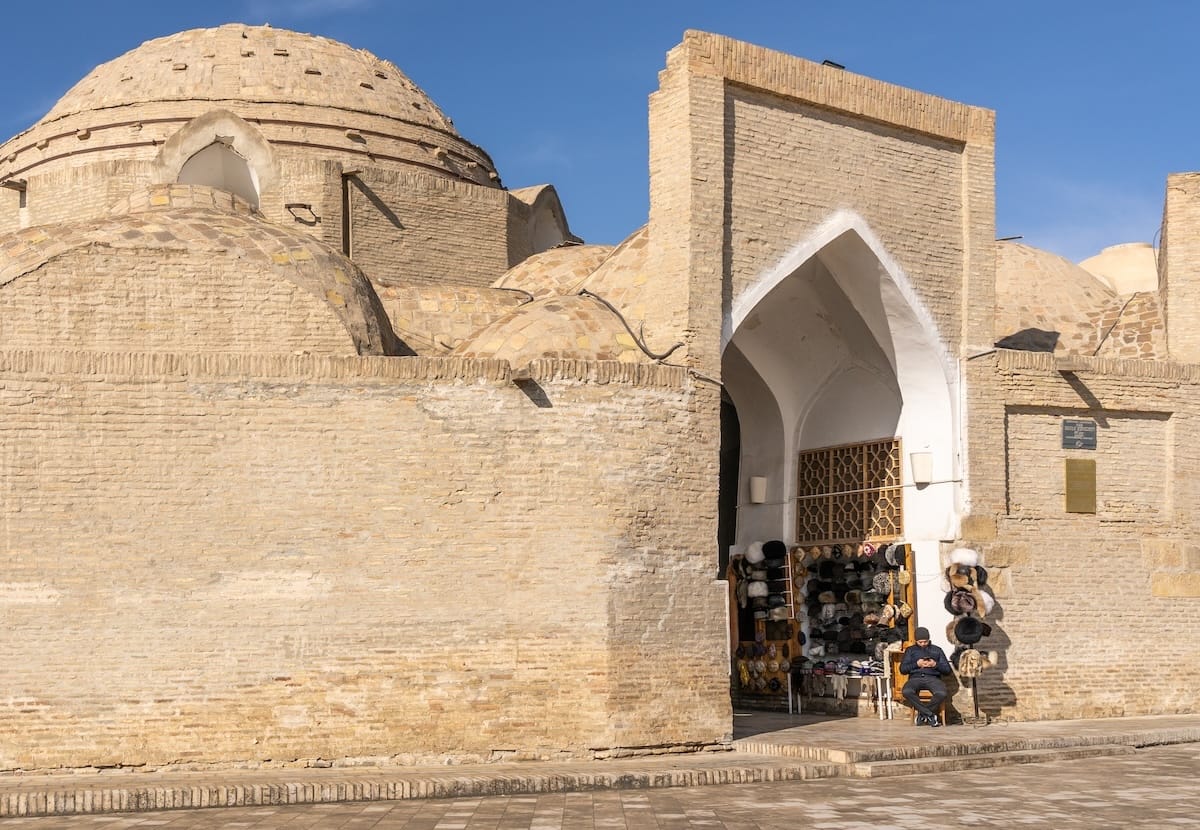
You’ll find vendors there today, but I also loved that they played live music during the high season under the cupolas. The acoustics were remarkable, and it was so unique to Bukhara.
12. Walk around the area west of Bukhara’s historic center.
I was hoping this area had a name, but I couldn’t find one, so I will just break down the places to visit here instead.
In this area behind Bolo Hauz Mosque, you will find Samonids Recreation Park, Ismail Samani Mausoleum, the Bukhara Central Market (Markaziy Bozor), Chashmai Ayub Mausoleum, and the Imam al-Bukhari Museum.
The Ismail Samani Mausoleum is argueably the most important site in Bukhara. It is the city’s oldest surviving building and was built in the 10th century as the resting place for the Samanids. It has been reconstructed and preserved over the years… and the inside is very simple. If you visit at the right time of day, the light comes through the window so beautifully it is relaxing to just sit there and take it all in.
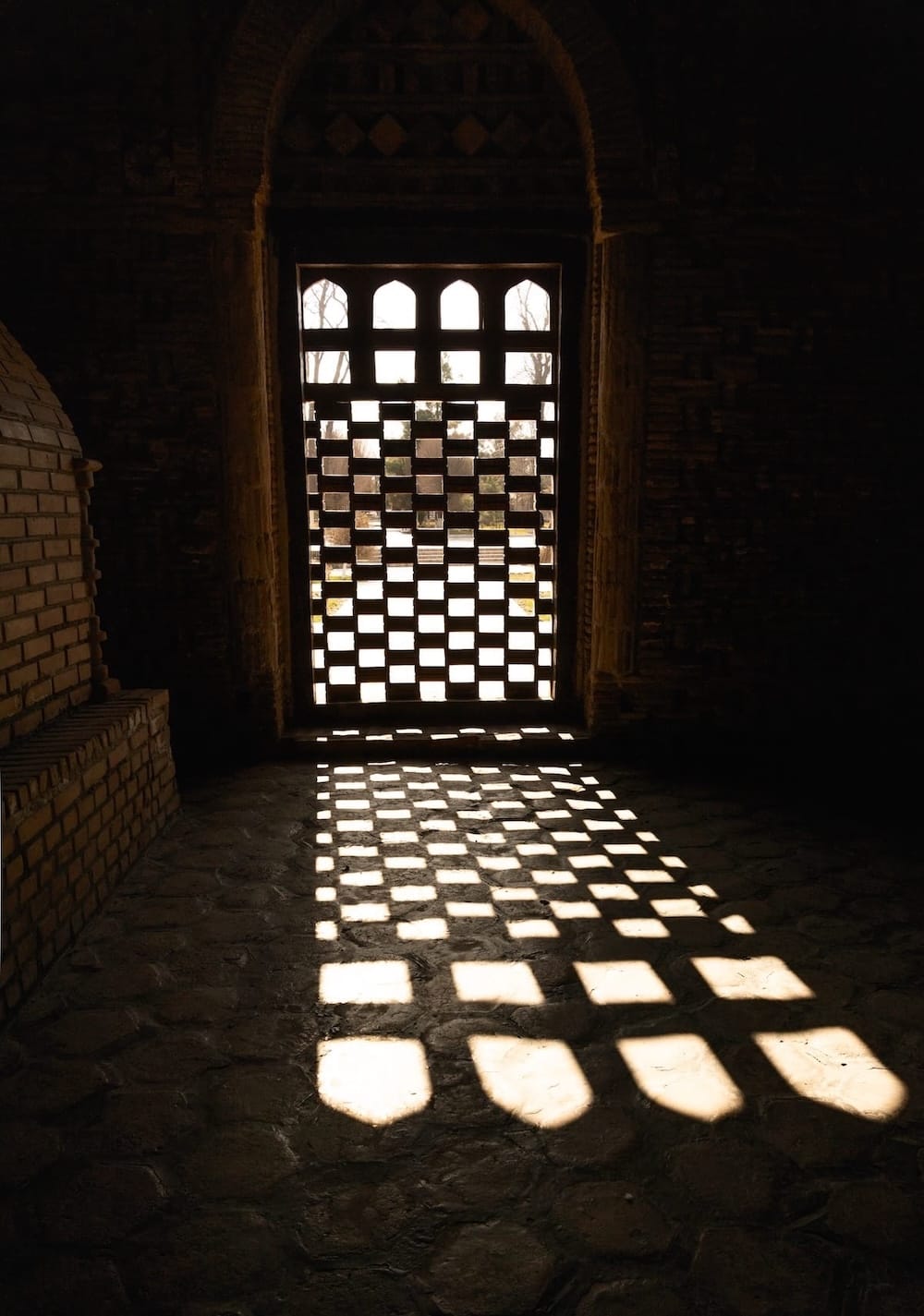
It is 15,000 UZS to visit Ismail Samani Mausoleum, and you can get there with a short walk through Samanids Park.
Another spot (possibly) worth visiting is Chashmai Ayub Mausoleum, a mausoleum that was built to honor the Prophet Job, who is said to have passed through when Bukhara went through a drought and a spring randomly appeared. Today, it houses the Bukhara Water Supply History Museum, and you can visit for 20,000 UZS. If you’re on a budget, this could be a place worth skipping, to be honest.
The Bukhara Central Market is also in this area and worth a stroll through. You can see local ingredients for sale, including dried fruit and nuts (yum!).
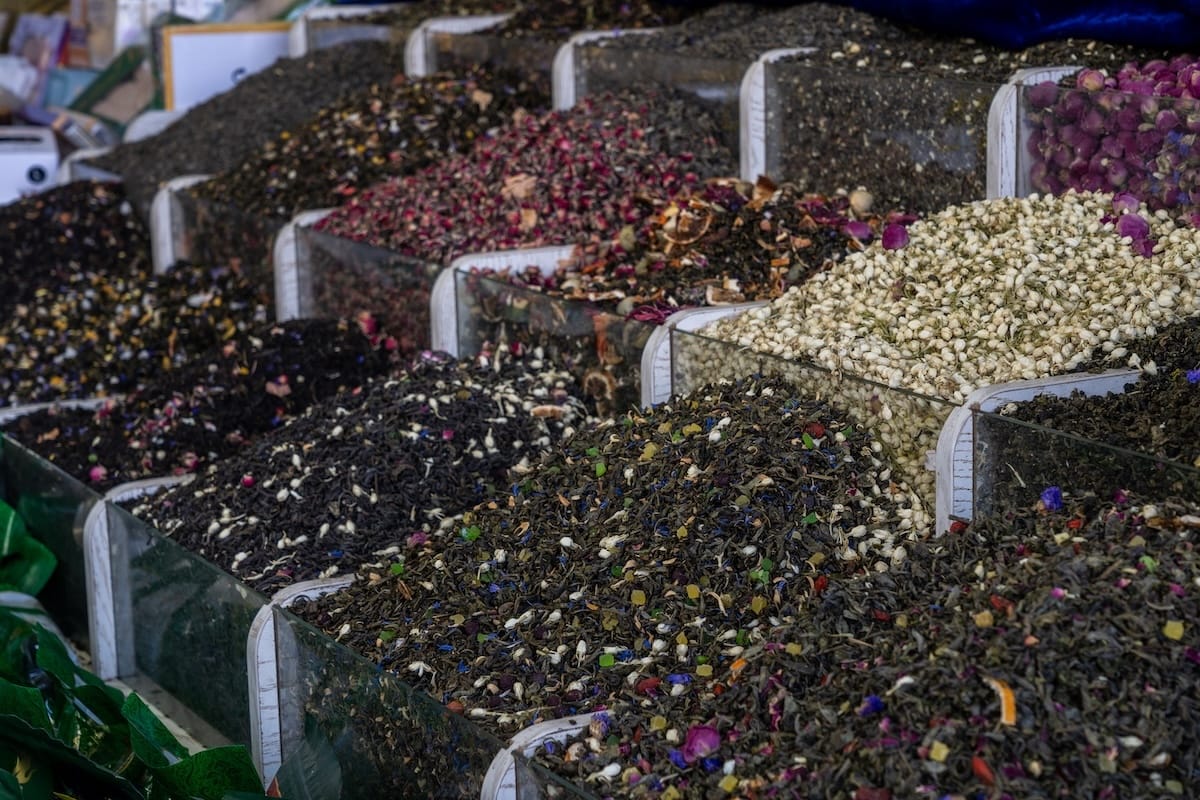
You will also see cottonseed oil for sale everywhere, which is very specific to Uzbekistan and its history of cotton production. Please don’t take photos of vendors without their permission here.
13. Take a taxi out to Chor Bakr necropolis.
Something that I see most people leave off their Bukhara itinerary is visiting Chor Bakr necropolis. It is outside the city by around 15 minutes and requires a short taxi ride (around $3 or less) to get to. But I really enjoyed visiting Chor Bakr and recommend it if you have enough time in Bukhara.
Located around 6 kilometers west of Bukhara, Chor Bakr sits in the middle of fields and not far from the main highway. It directly translates to Four Brothers, all of whom are descendants of Prophet Muhammad and are buried together here.
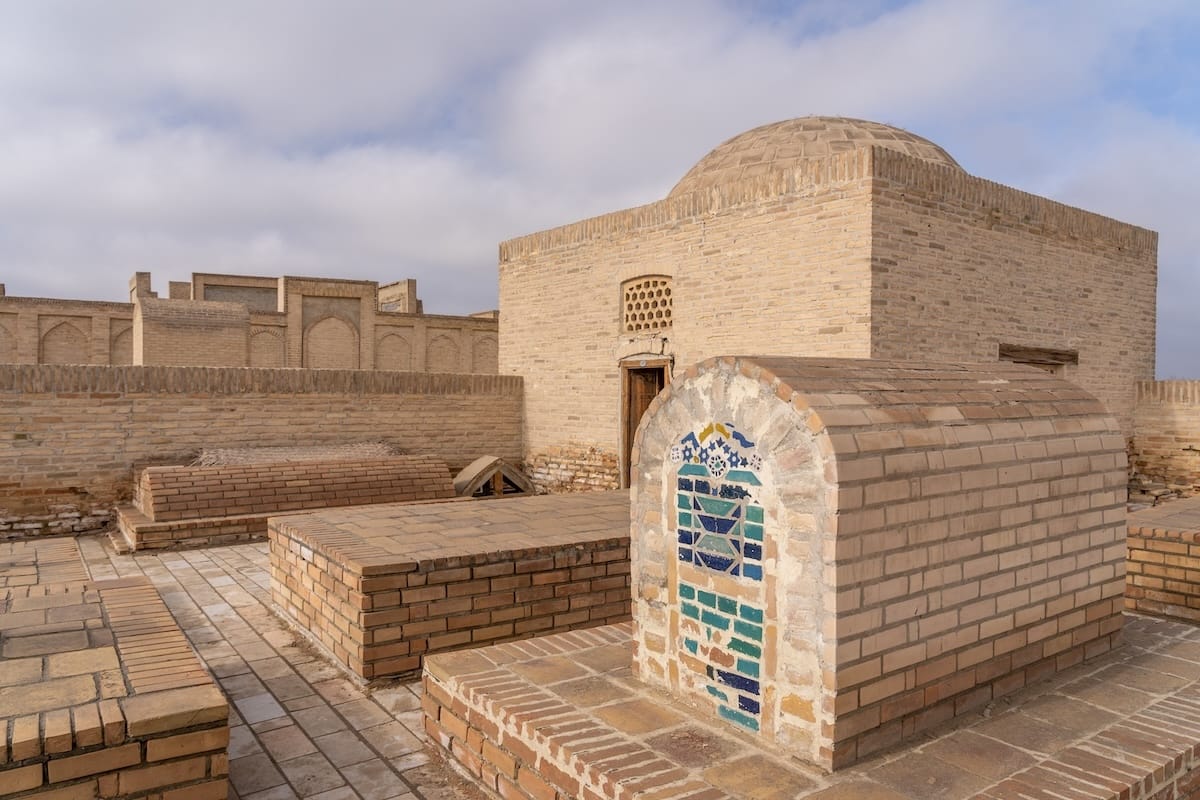
Chor Bakr is a pilgrimage site for Muslims, and there are mosques, tombs, and an entire complex that resembles a little city that you can walk around. I went out here on my winter visit but not during my spring ones, and I was the only person there during my time. I didn’t have to pay an entrance fee (I left a small donation though), but there may be one during the high season.
Pro Tip
After your visit to Chor Bakr, walk to the main highway again, and you will see a few roadside restaurants. They all offer some of the city’s best olot samsa straight from the tandir. It’s worth grabbing one before ordering a taxi back to the center.
What to Skip in Bukhara
Ark of Bukhara (The Inside)
The Ark of Bukhara is unavoidable when you’re visiting Bukhara, and taking photos of it from the outside is a must. But how about the inside of it?
Well, I don’t recommend paying for a ticket to go inside currently. The Ark of Bukhara was left off my city tour, and I asked my guide (who is a local) why, and she said it wasn’t worth it. Naturally, I was intrigued since I was going to be writing extensively about Bukhara.
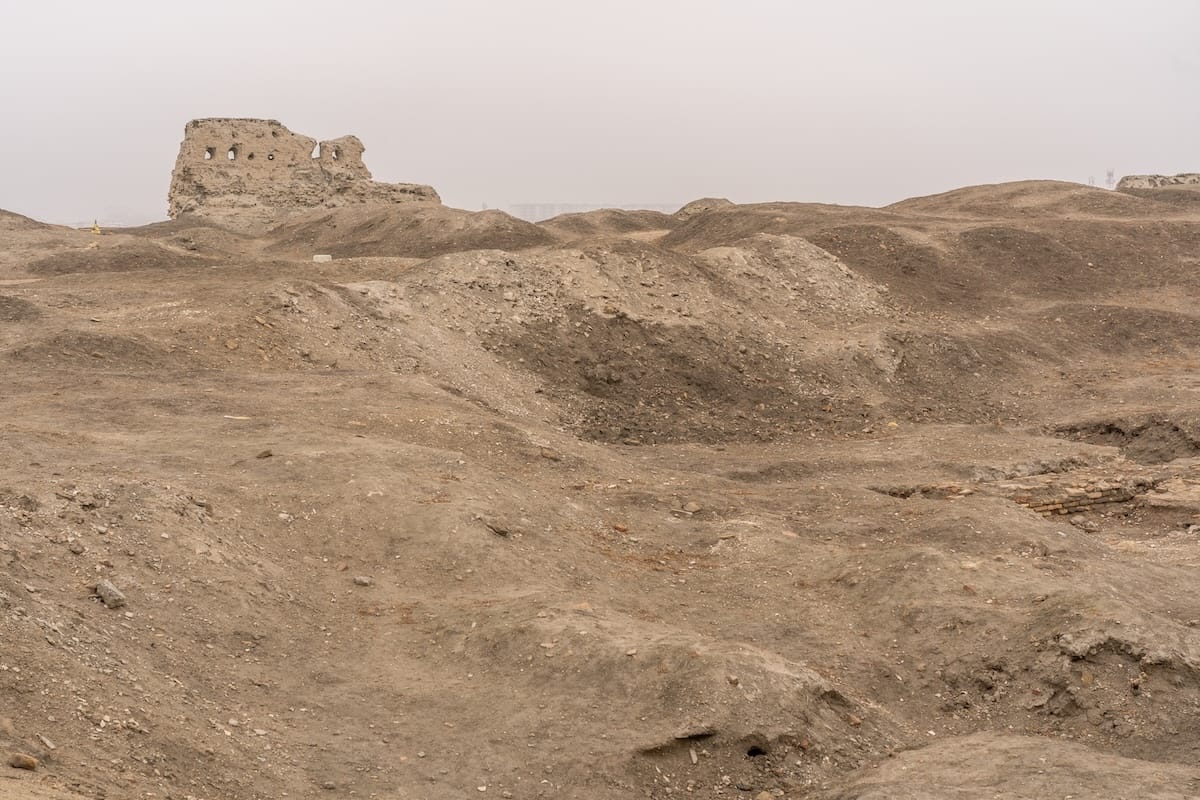
I paid the 60,000 UZS entrance fee and went in. Honestly, there were some exhibits, and then some ruins (that are newer) up top, but nothing was actually worth my time. It was mostly men doing photoshoots pretending to be on the phone up there. If you have extra time in Bukhara and are curious, it may be worth your time, but I wouldn’t prioritize it on your itinerary.
What to Do in Bukhara FAQ
These are some of the most asked questions about what to do in Bukhara (and what to know before visiting).
Do you have any questions about what to do in Bukhara for beginners? Let me know your favorite things to see in Bukhara in the comments. Thanks!
