

A Guide to Soviet-era Mosaics in Bukhara (+ Free Map)
What’s in this guide: I will cover all the Soviet-era mosaics in Bukhara that I stumbled upon during my trip there. While I will include other monumental art that I find on future trips, I never saw anything other than mosaics around Bukhara (and one mosaic-relief).
I have included a map and coordinates to help you locate each of them with ease.
Quick Bukhara Travel Guide
If you’re traveling to Bukhara at the last minute, be sure you have hotels and tours booked ahead of time. Below are some of my top picks:
🇺🇿 Best cultural workshops and activities from Bukhara:
- Affordable group walking tour of Bukhara (starting at €26)
- Suzani embroidery workshop (organized by Craft&Culture, my fave company in UZ)
- Miniature painting workshop (another top-seller from Craft&Culture)
🛌 Top hotels and lodging in Bukhara:
- Duston Boutique Hotel (where I like to stay in Bukhara, near historic sites)
- Bibi-Khanym Hotel (beautiful, woman-owned hotel in the city)
- Rayhon Boutique Hotel (affordable option close to main sites)
When I visit places in Central Asia, I focus my trips on the destination’s history and culture. But, if you’ve read this blog in the last 16 years, you will also know that I like to seek out Soviet-era monumental art in places. I am especially fond of mosaics and stained glass.
Sometimes I do my research and sometimes I don’t, depending on the size of the city. Usually, I can take a peek at 2GIS or Yandex satellite maps and pinpoint which areas are likely to have Soviet-era mosaics hanging around… and then I take a taxi to the area and wander around.
With Bukhara, however, I did try to research a little just to ensure that there were, in fact, a few pieces of Soviet-era monumental art in the city (shoutout to Armenian blogger Gaia for her amazing post on public art throughout Uzbekistan).
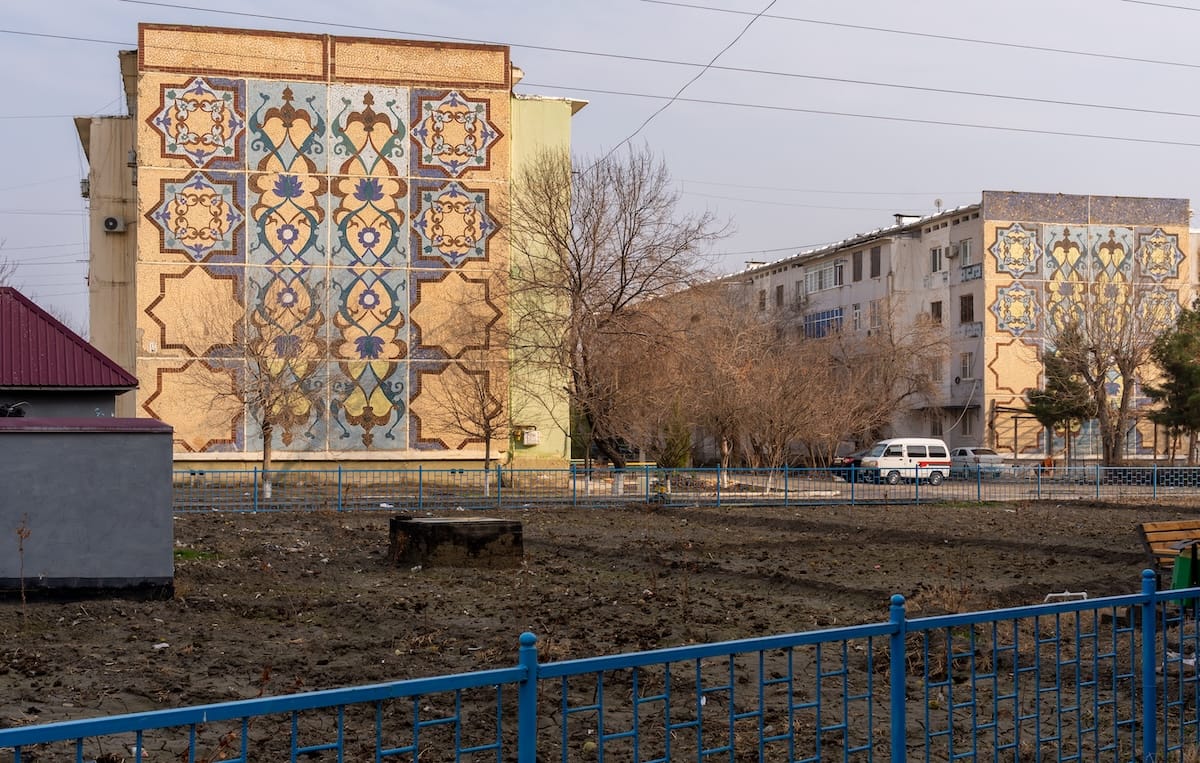
Anyway, this guide is a collection of Soviet-era monumental art in Bukhara. I will be adding to this as I am back in the city twice on upcoming trips (pending I find additions). If something is missing here, please let me know in the comments. Also, if you know of the artists, year, or any other info that is missing, drop me a line so I can give them the credit they deserve.
At the end, there is also a map of exact locations so you can find each place independently. You will need to do some heavy walking to see all of these, but a Yandex taxi can take you out of the Silk Road sites for around $1.
Overview of the Soviet-era Monumental Art in Bukhara
Honestly, the Soviet-era mosaics in Bukhara are looking rough. I don’t know how much longer some of these mosaics will be around. The one mosaic-relief I came across was in decent shape (more the relief than the mosaic), but I think it was because it was a government building.
One of the more famous mosaics in Bukhara, the Construction Mosaic off of Mutal Burhonov Avenue, has been lost as it was (poorly) painted over. I am still going to include it at the end in case changes are made as it is definitely peeking through the paint. The other Bukhara mosaics in this guide are from photos taken in February 2026.
Soviet-era Mosaics in Bukhara, Uzbekistan
1. 1980 Olympic Games Mosaic
Location: 39.74077, 64.43322
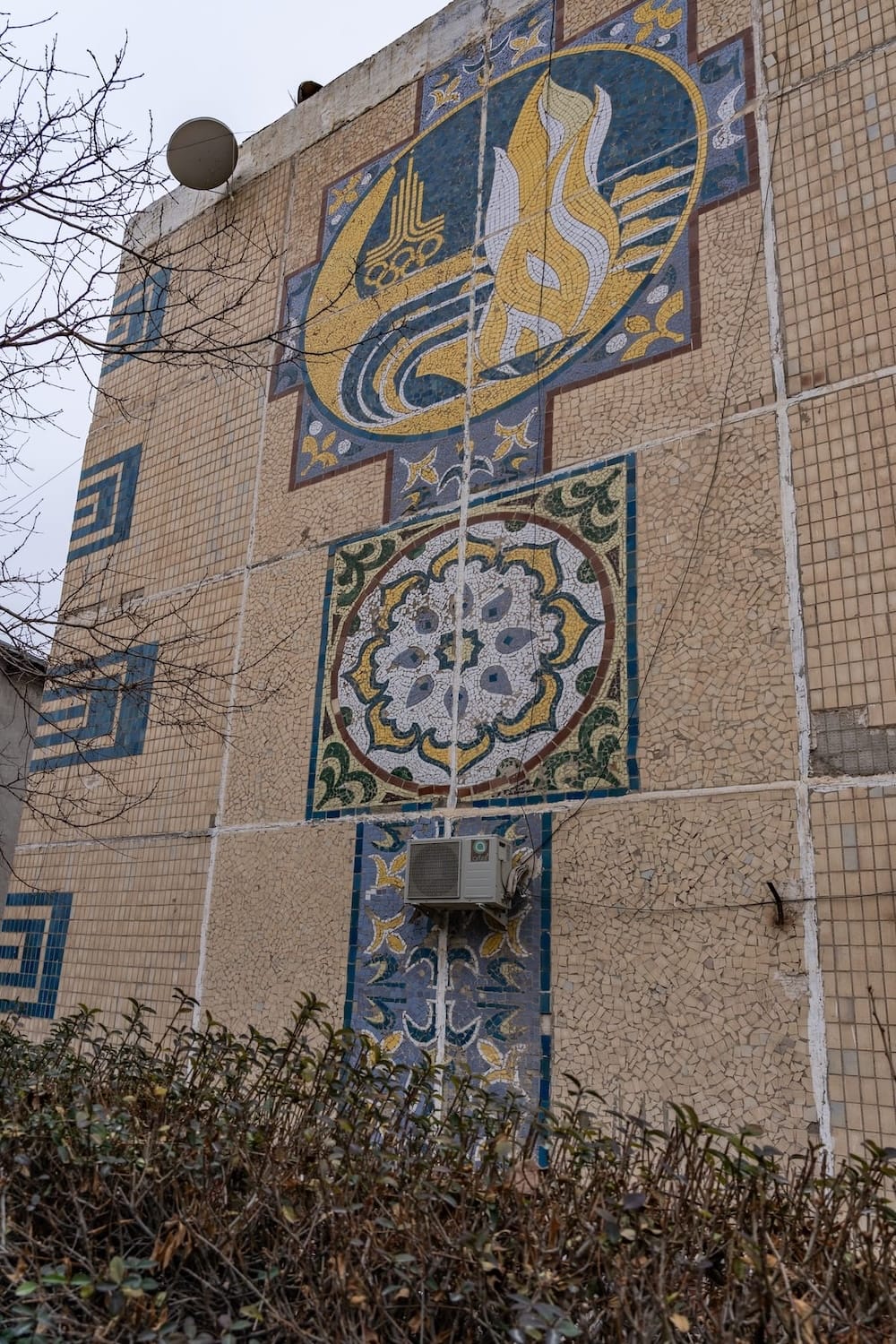
Situated quite close to the Misha bear mosaic (probably the most famous mosaic in Bukhara) is one dedicated to the 1980 Olympic Games. This is located on the side of a residential building and is in decent shape compared to other mosaics around the city.
2. 60 Years of USSR Hammer and Sickle Mosaic
Location: 39.74077, 64.43322
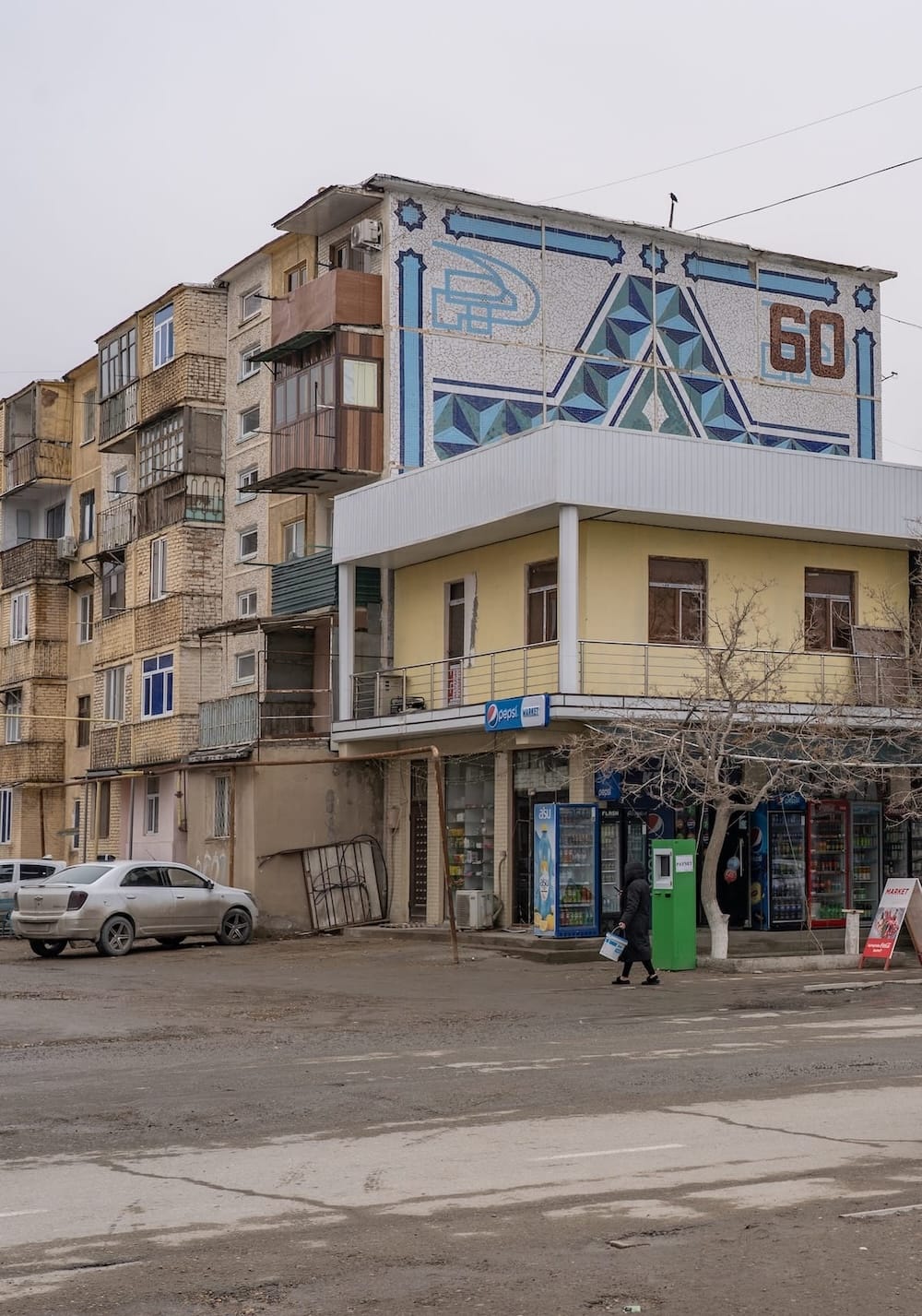
At some point in recent years, this mosaic was partially covered up to what you see today. I did see that a shop was underneath it a few years back, but another floor has recently been added to the shop, leaving only half of the mosaic exposed.
3. Misha the Olympic Bear Mosaic
Location: 39.74111, 64.43408
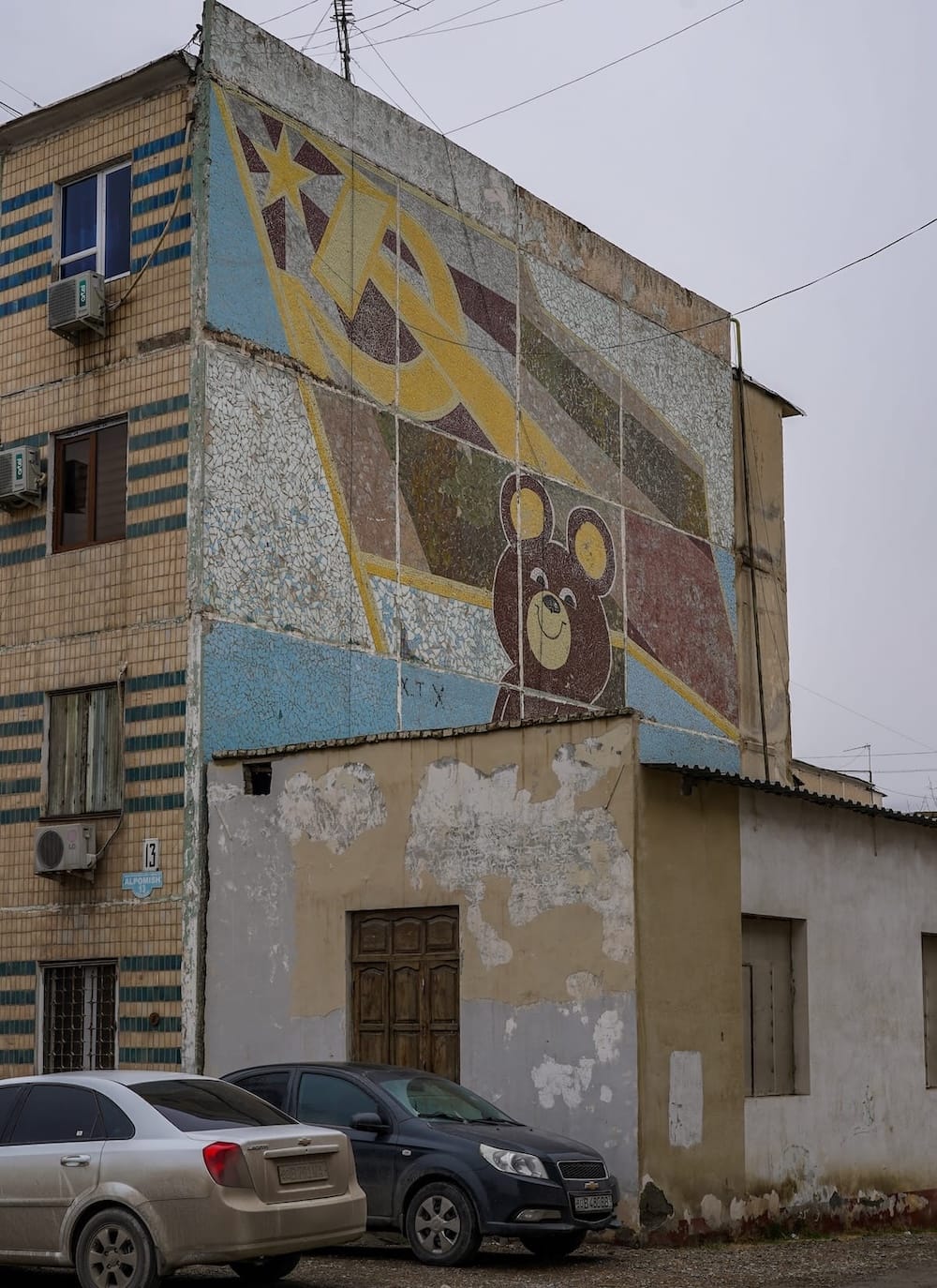
On a side street off of Alpamysh is the city’s most notable mosaic, one of Misha the Olympic bear. Misha, created by Victor Chizhikov, was the mascot of the 1980 Olympics and he can be seen on mosaics across the former USSR.
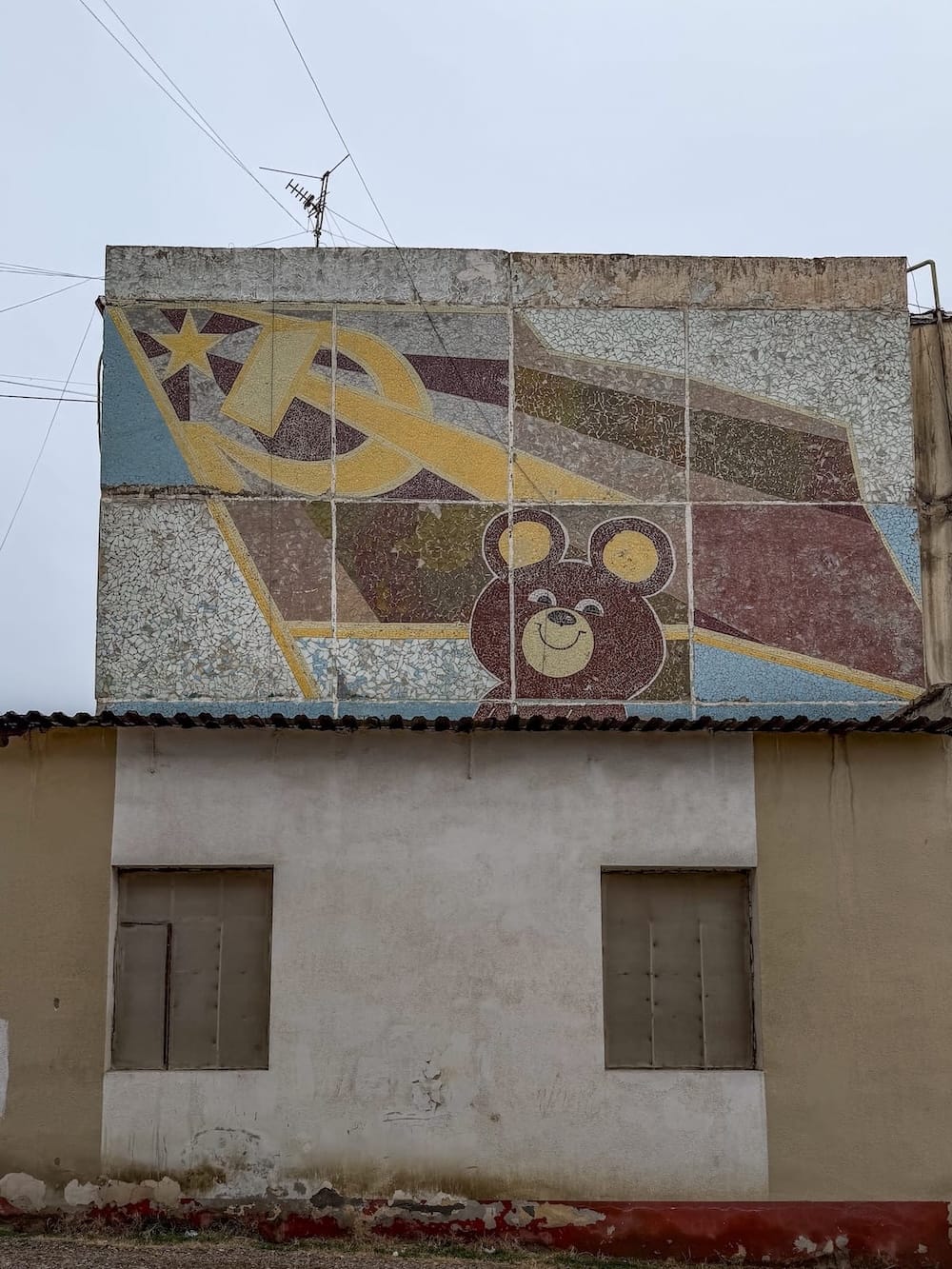
This mosaic has been partially covered at some point by a random one-story structure. You can still see the top of the mosaic without any issues (I didn’t go upstairs in the adjacent building for a better view, but I guess you can ask if you want a better angle).
4. Chirchik Cotton Mosaics
Building 1: 39.75047, 64.43148 and 39.75047, 64.43148 (opposite ends of the same building)
Building 2: 39.75281, 64.42712 and 39.75352, 64.42714 (opposite ends of the same building)
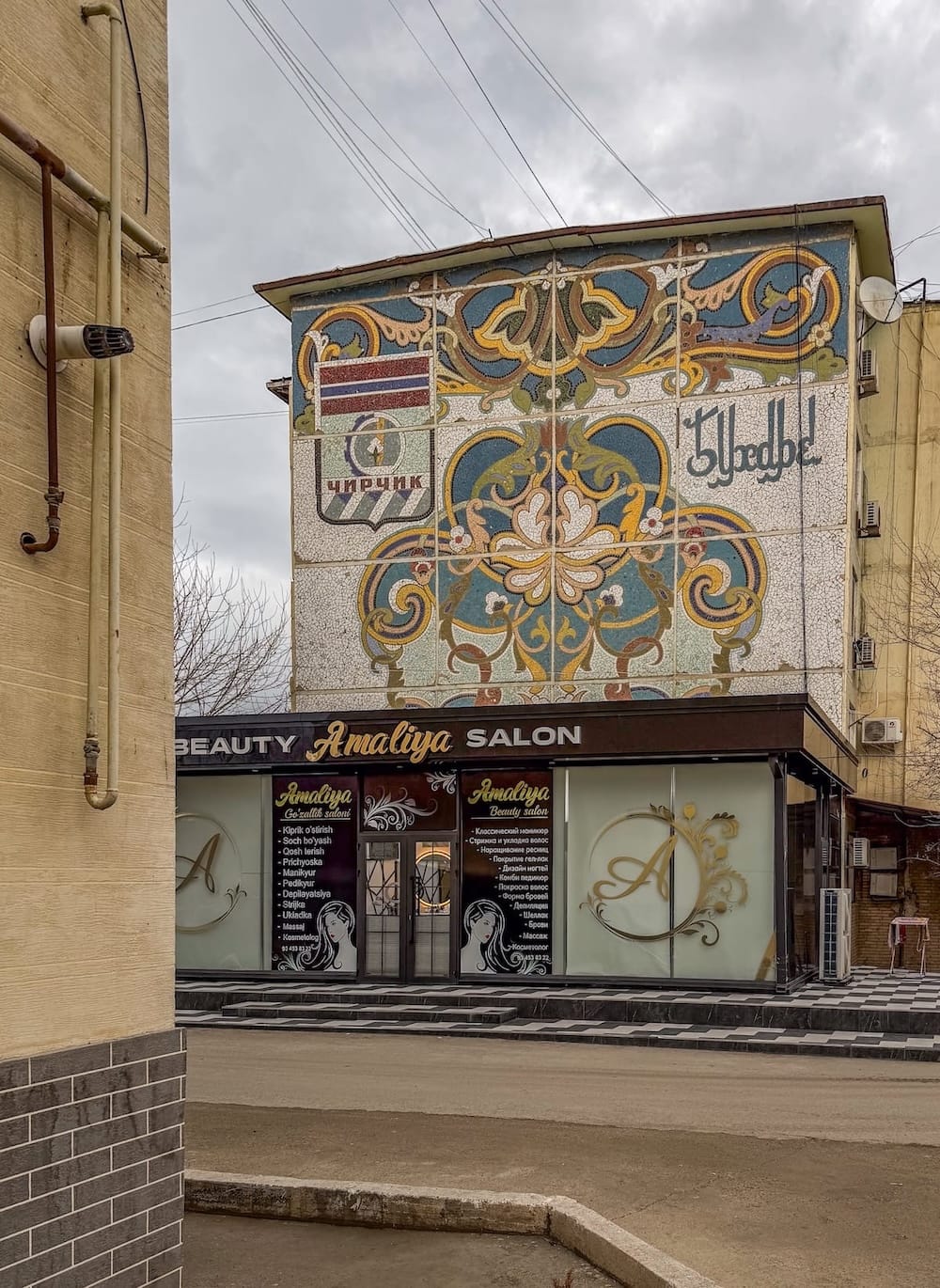
There are four mosaics I am covering here. I am lumping them together because they are all very similar and show patterns of being by the same artist (whose name I don’t know, unfortunately).
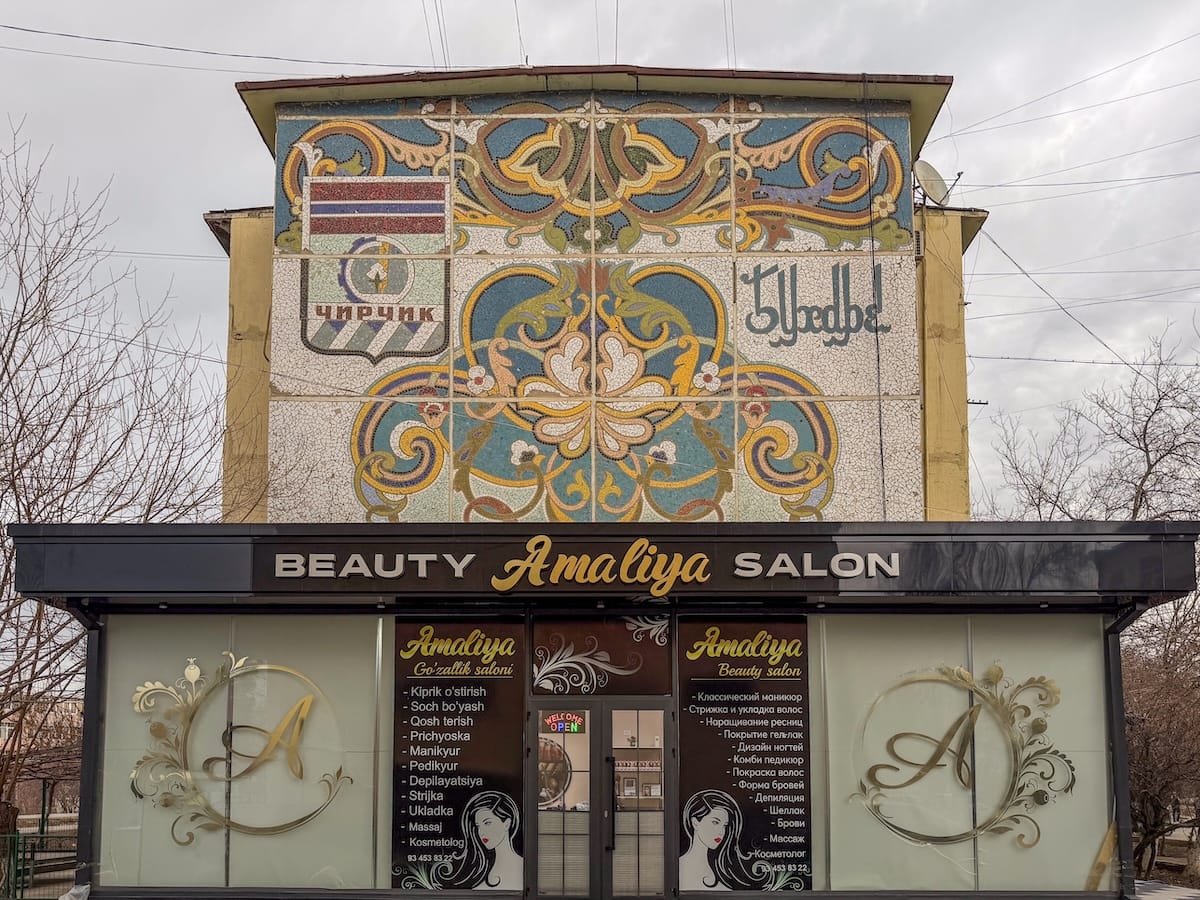
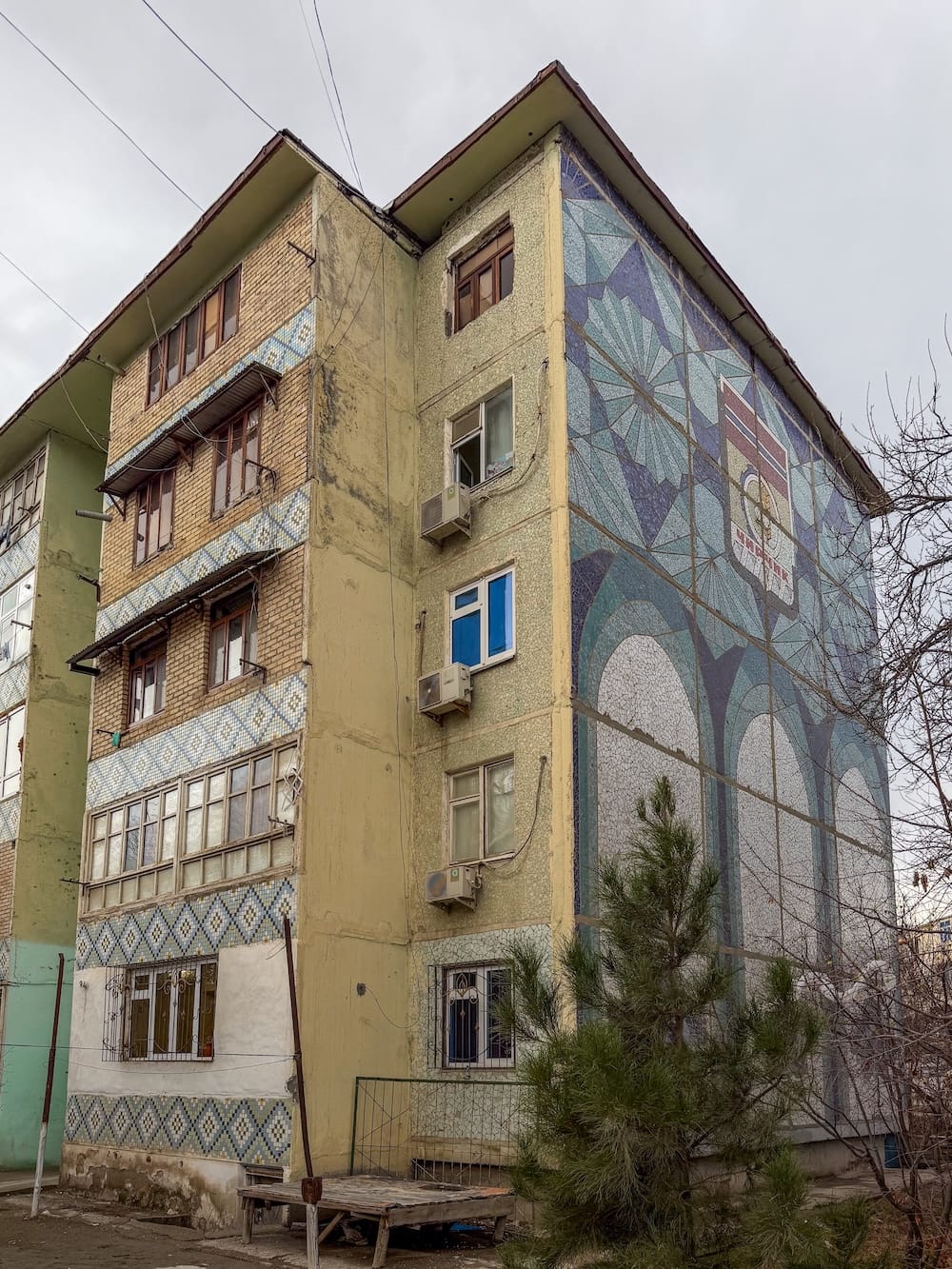
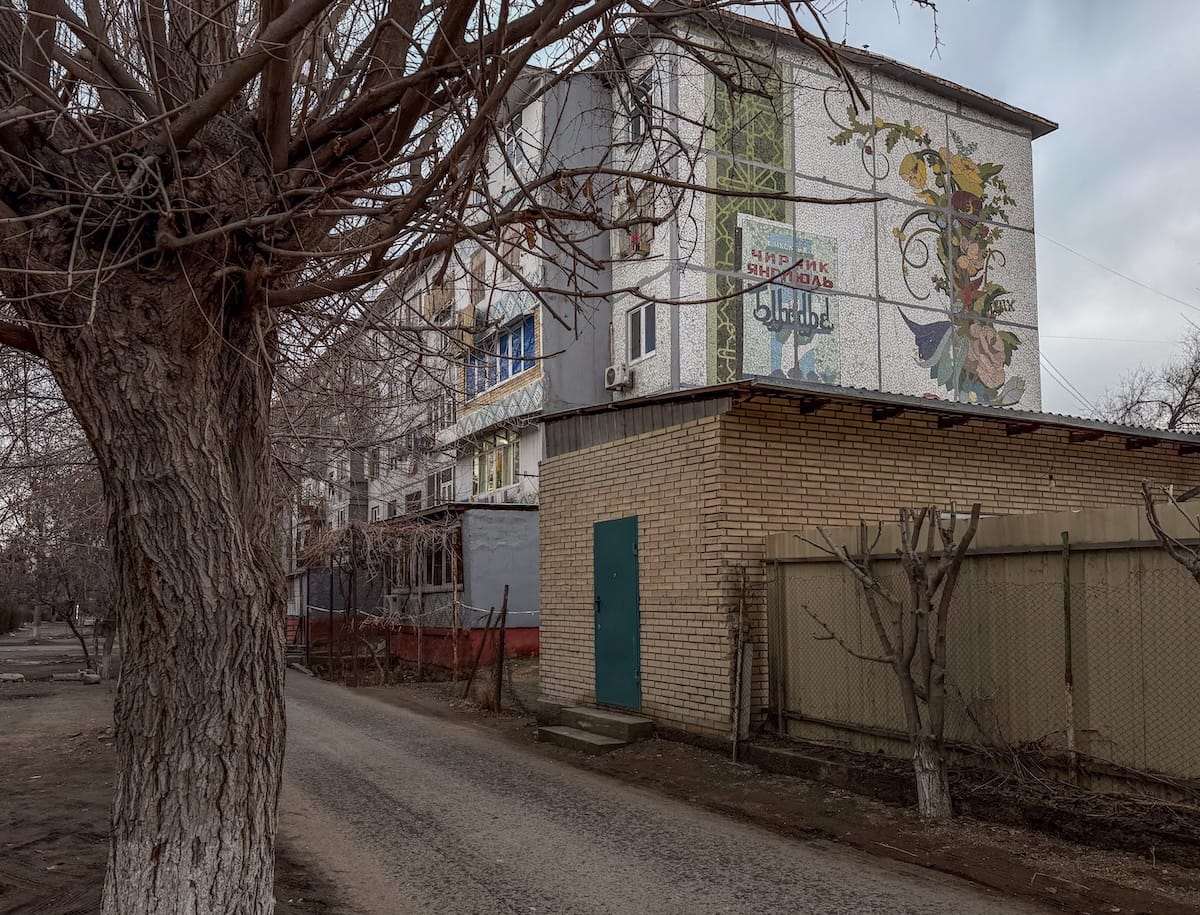
I do not know what they stand for, but based on the Russian writing, it says something regarding Chirchik and Yangiyul (Chirchik is mentioned on three and Yangiyul is mentioned on one), which are both cities in Uzbekistan closer to Tashkent. Chirchik is also the river that goes through Tashkent and was a key player in the cotton industry.
Anyway, these mosaics have flowers, the ubiquitous cotton motif you will see across the country, and other random designs. On the one that also mentions Yangiyul, a company called ЧКСМ is also mentioned, which I found was a brick company that operated in these cities.
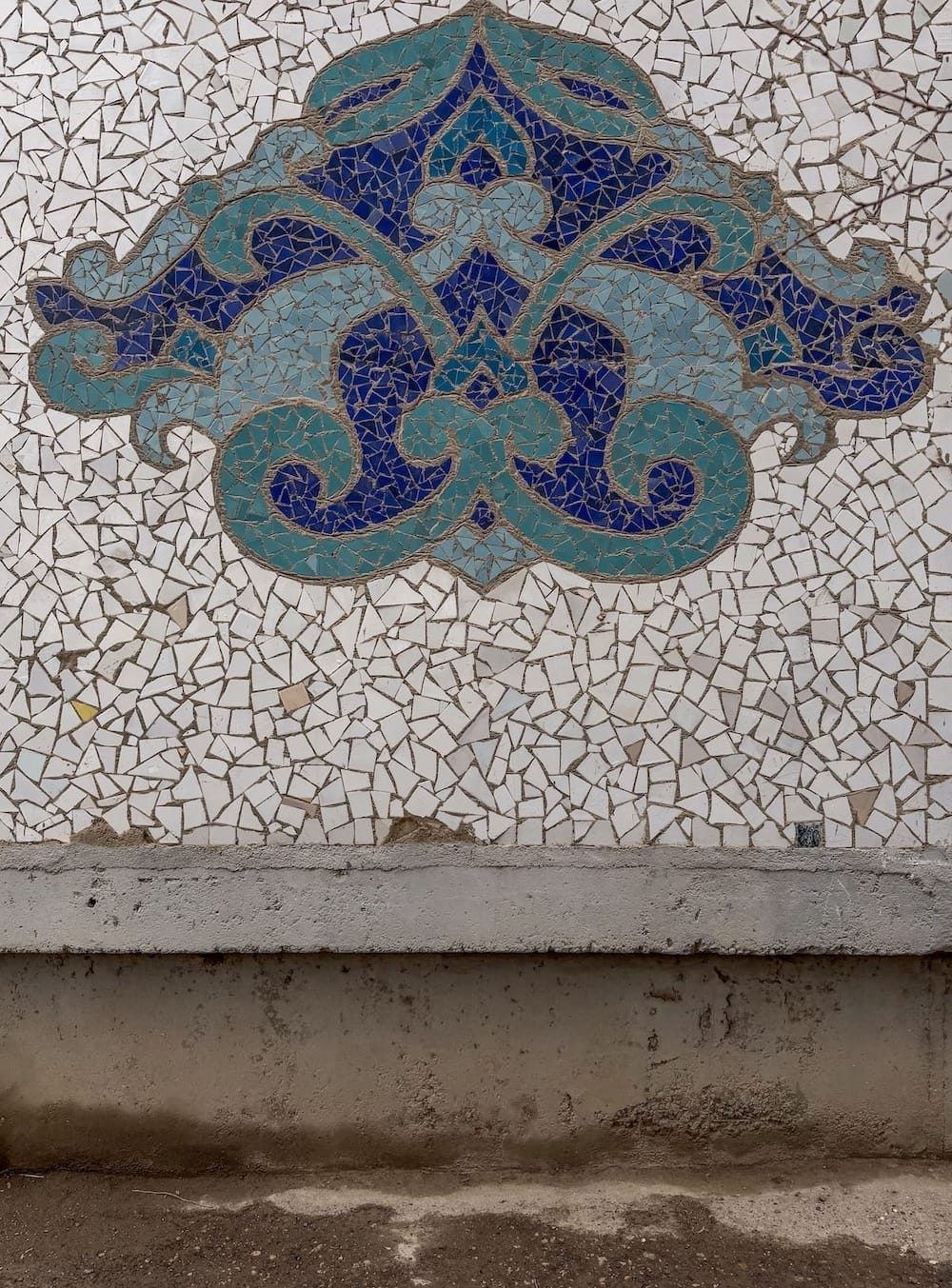
So, I am assuming (with no confirmation) that these residential buildings were built from bricks from these factories up north. I don’t entirely understand the cotton motifs, except that maybe they were trendy to put everywhere at the time, since Uzbekistan was (notoriously) known for its cotton production.
Building 1
The first mosaic (39.75047, 64.43148) has recently been partially covered up by the Amaliya Salon that has set up shop below it. You can still see the majority of the mosaic, however, as well as the Chirchik coat-of-arms symbol in the upper left-hand corner.
The other side of the building (39.75047, 64.43148) has the same Chirchik symbol, but with a very different design. In various hues of blue and teal, you will find the cotton motifs you ubiquitously see across Uzbekistan.
Building 2
This building is around a 5-minute walk from the other one, and the mosaics are on opposite sides of the building (which shows at 3 separate buildings on a map).
The first mosaic is the third Chirchik mosaic (39.75281, 64.42712), and it also mentions Yangiyul (about 20 kilometers from Tashkent) as well as the brick company on it.
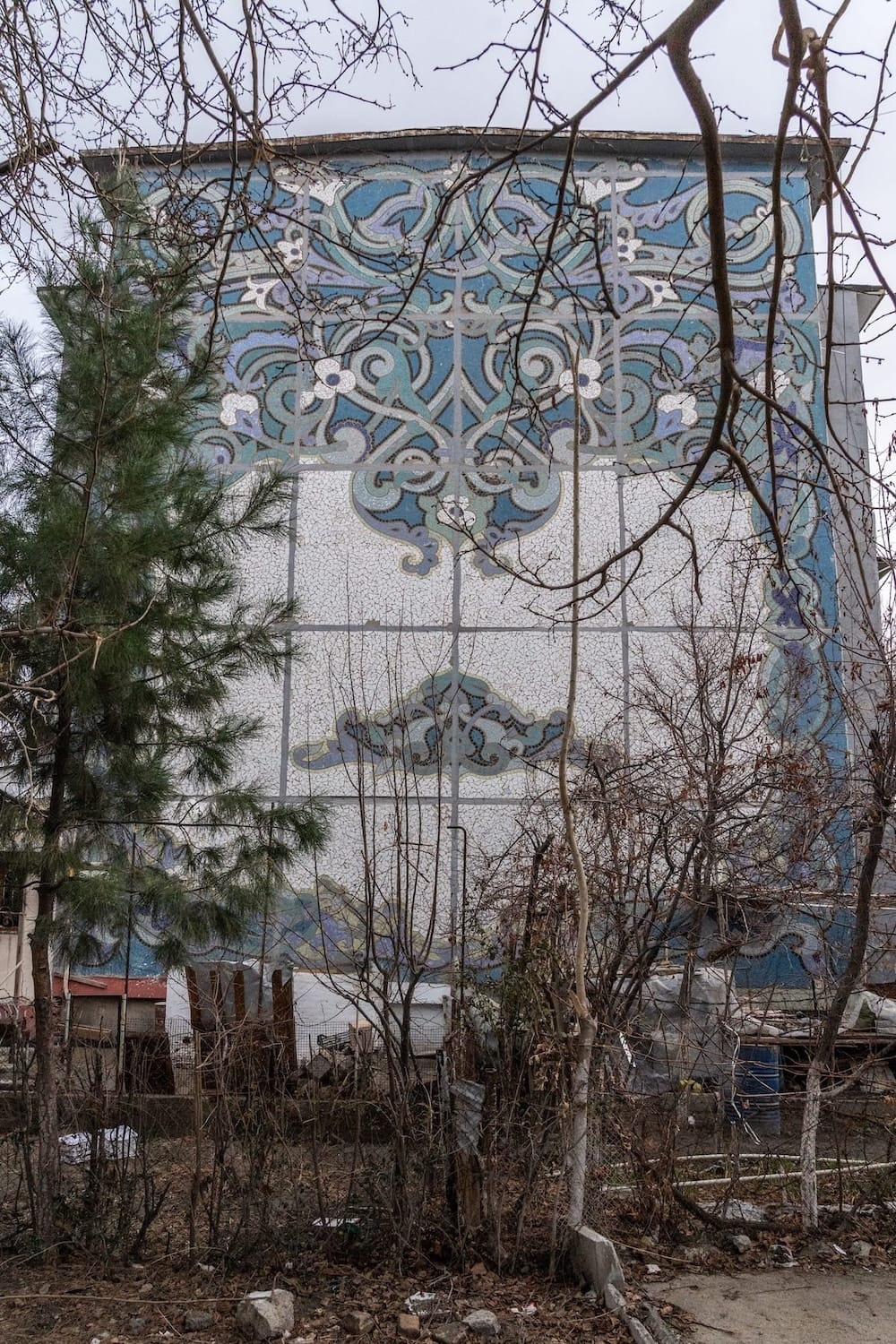
The second mosaic (39.75352, 64.42714) is various shades of blue and teal and showcases intricate designs.
5. Colorful Mosaic on a Residential Building
Location: 39.7495, 64.43372
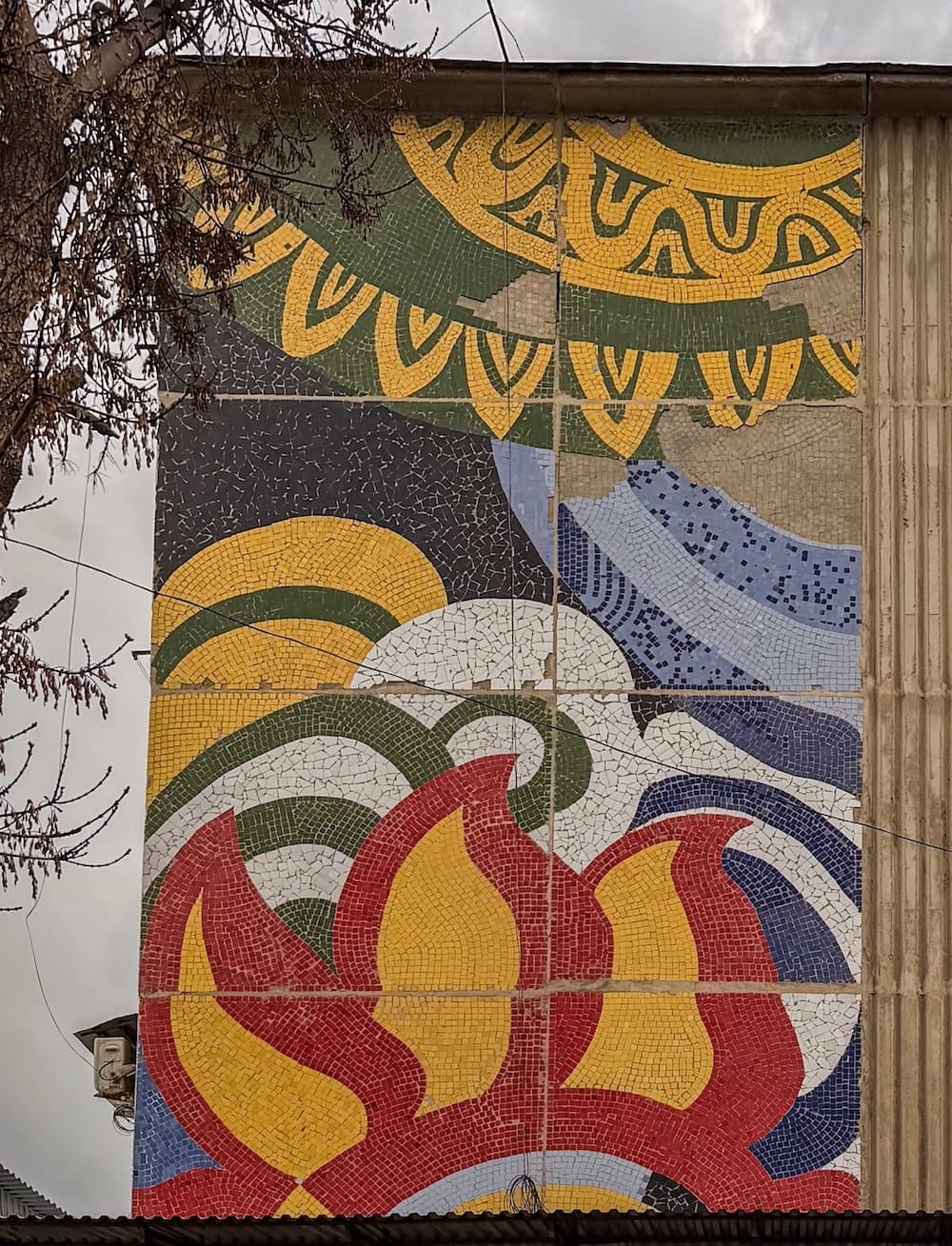
There is not much to say about this building, but it is close to the first Chirchik building mentioned above. It is a colorful design covering half the building’s facade. There is a salon called Shukran underneath.
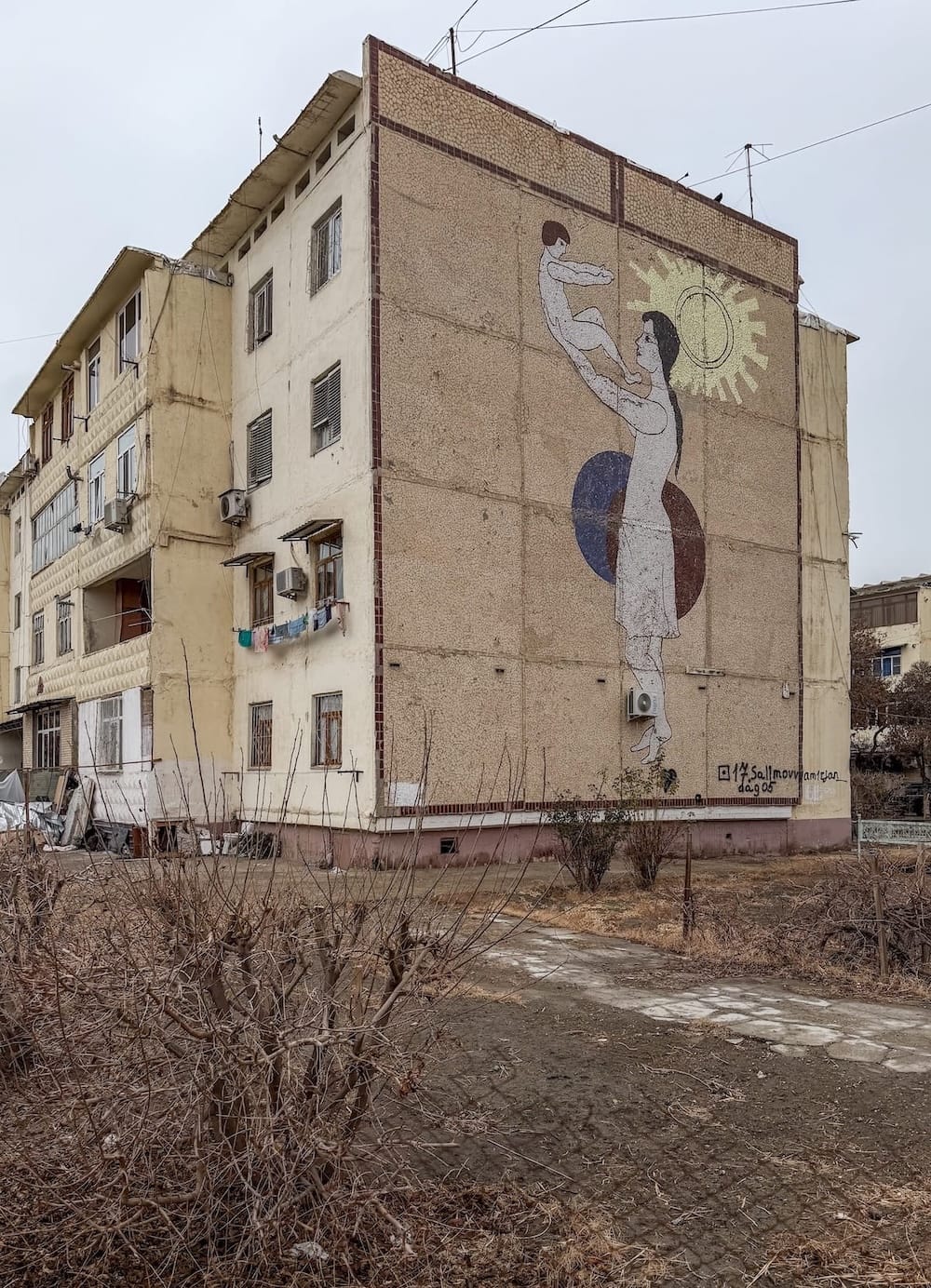
6. Mother and Child Mosaic
Location: 39.7472, 64.41197
Like the one above, there is not much to say about this one except that it is a mosaic of a mother holding up a child with a sun in the background.
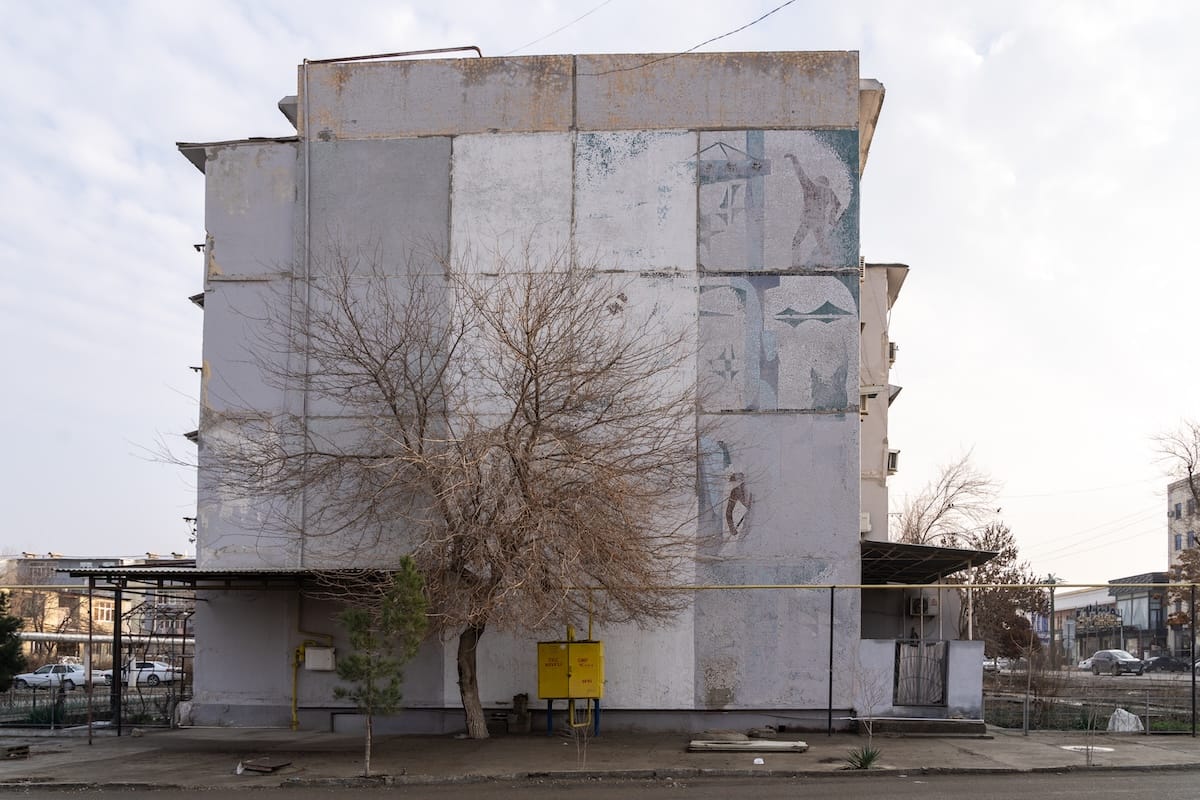
7. Bukhara Construction Mosaic (Lost)
Location: 39.76369, 64.45212
This was one of the most famous Bukhara mosaics from the Soviet era, but it has been painted over recently. It was only half-covered before, but someone bought that jar of paint and (half-assed) finished the job.
I am listing this here in case you happen to be in the area and want to see if anyone has magically uncovered it. You can still see traces of it beneath the paint.
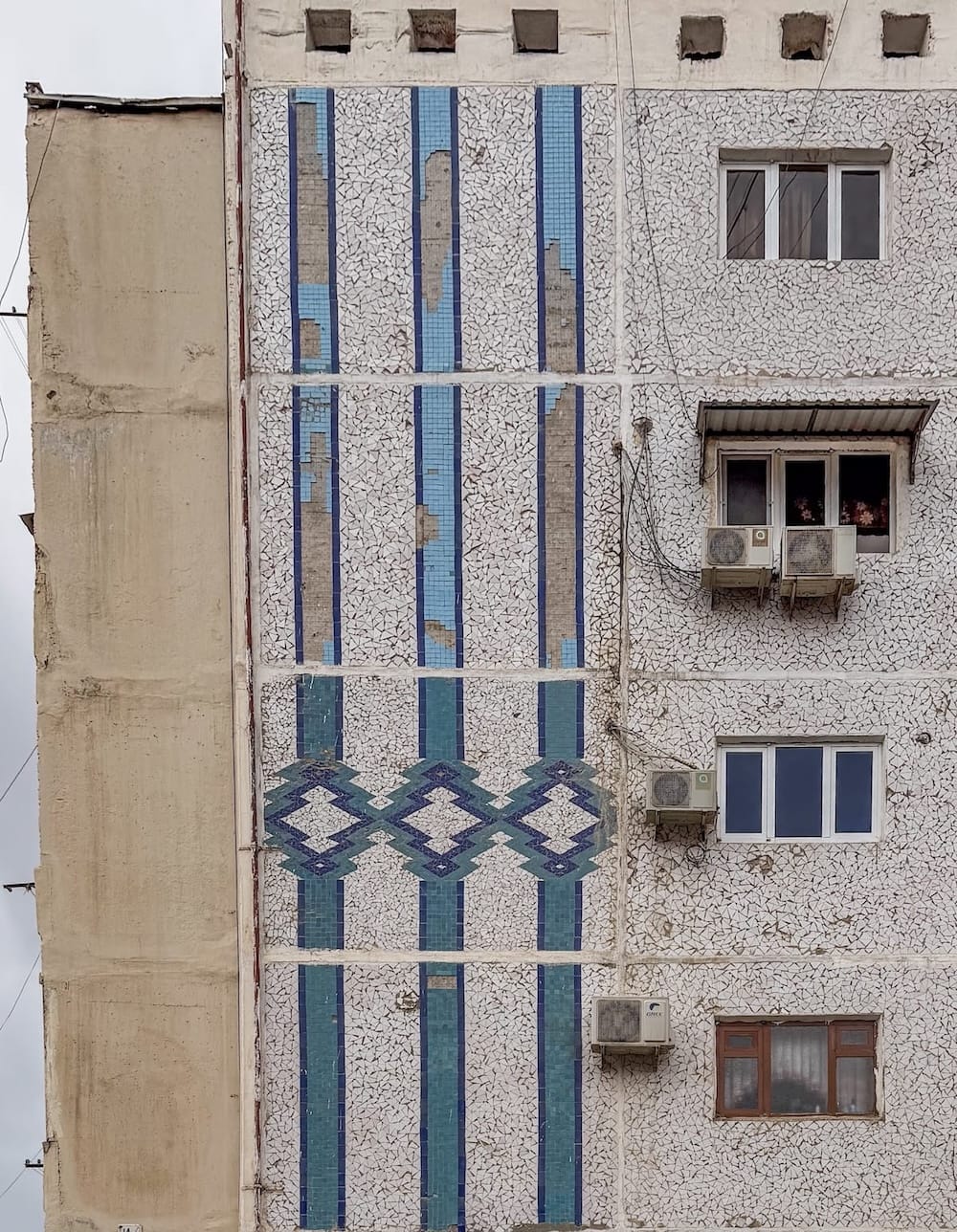
8. Blue and Teal Stripe Mosaic
Location: 39.74927, 64.43138
I wouldn’t go out of your way for this, but it is pretty close to the Chirchik and Colorful mosaics I mentioned above, so worth checking out as you pass by!
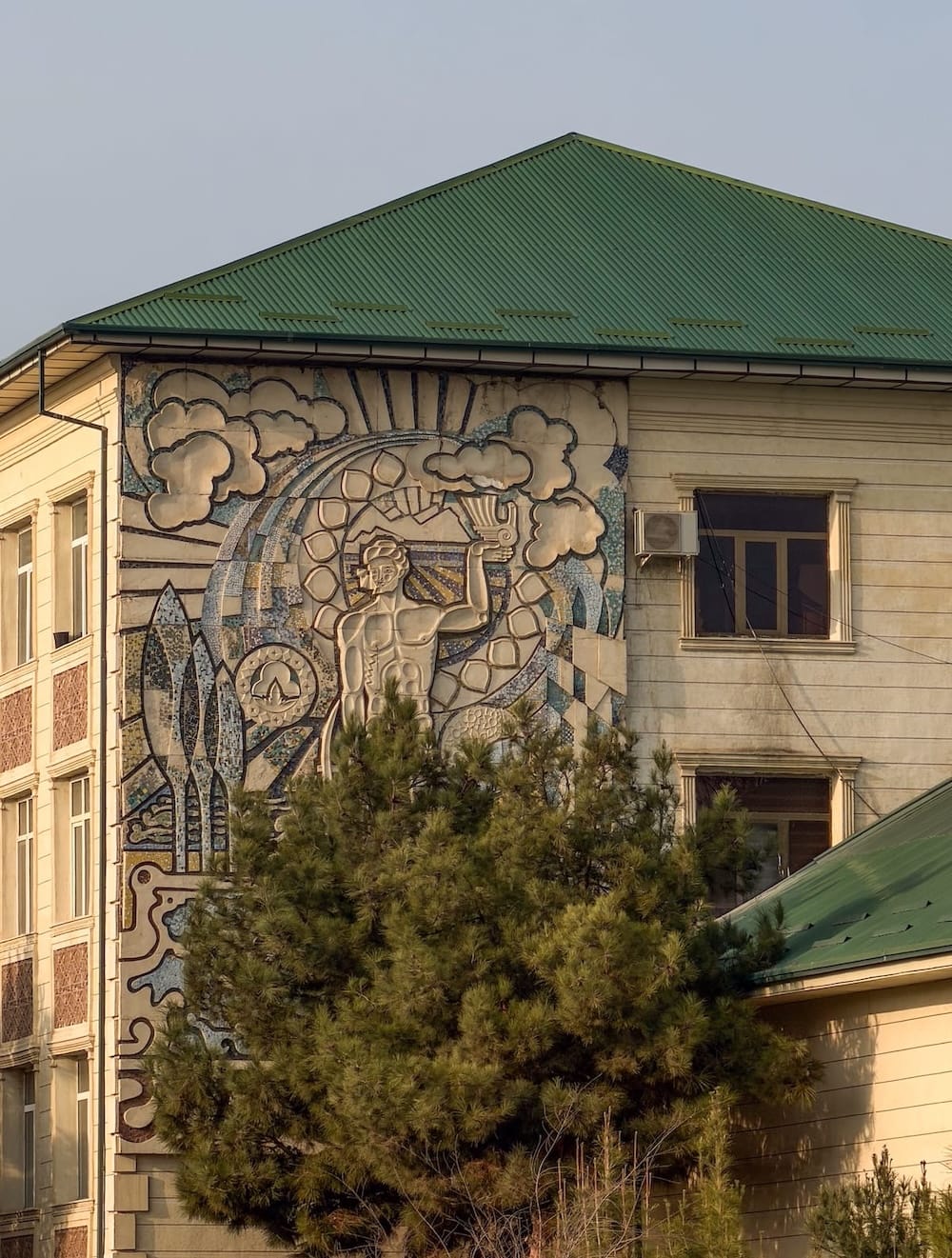
9. Bukhara Irrigation Management Building Mosaic-Relief
Location: 39.77006, 64.45124
On the side of this government building (for Bukhara Irrigation Management), you will see a Soviet-era mosaic and relief that is in decent condition, despite many of the mosaic tiles being gone.
More Bukhara Mosaics I Saw
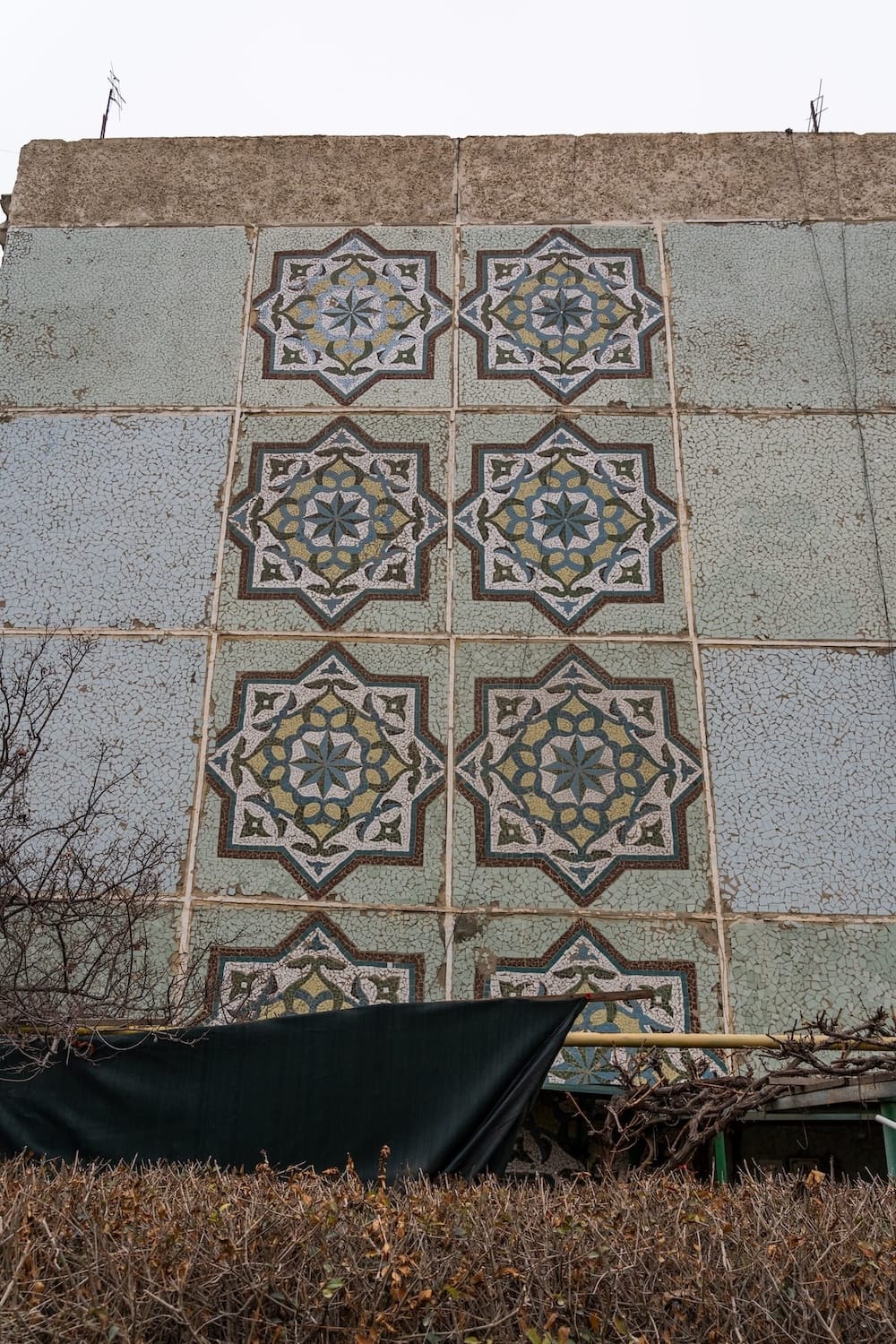
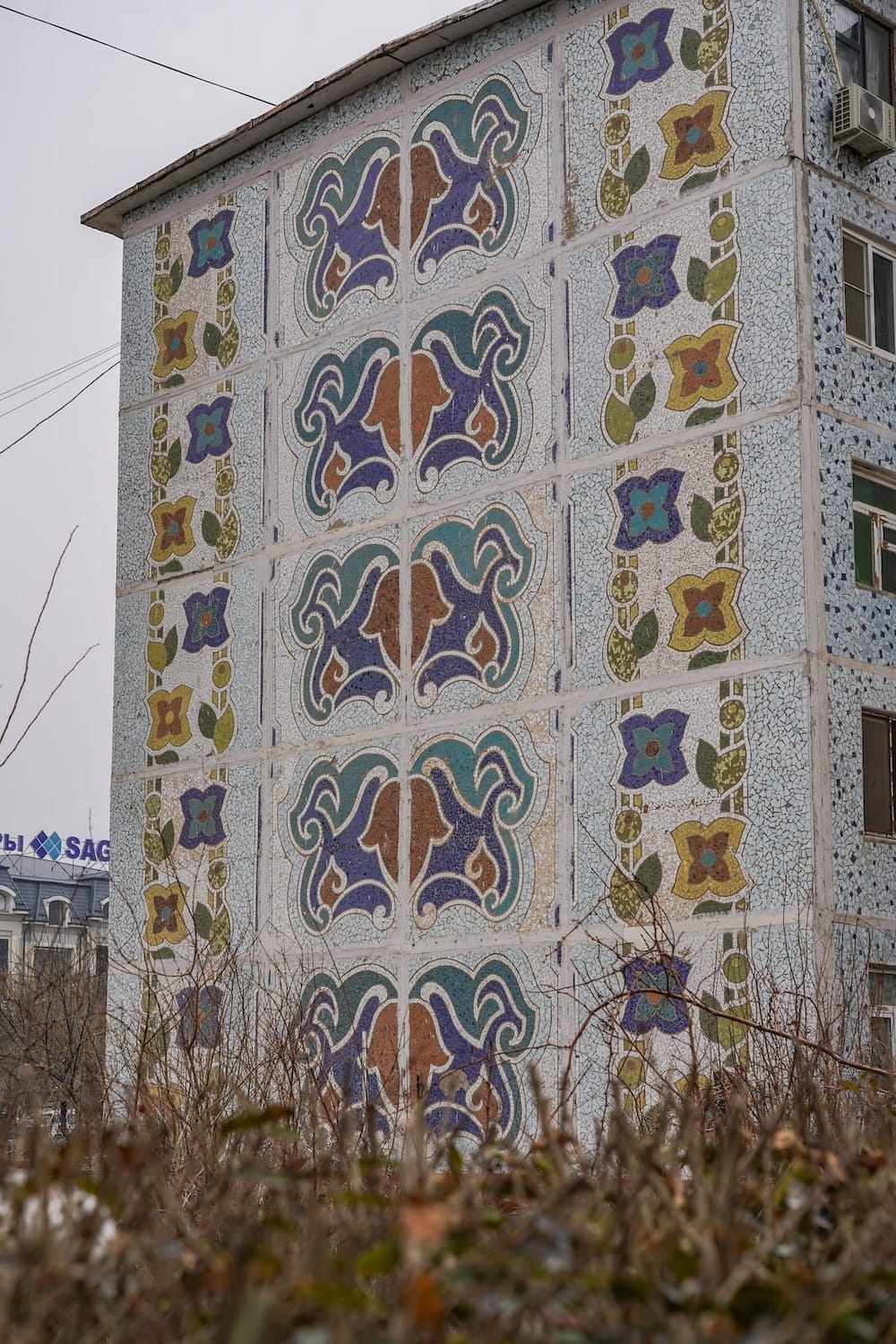
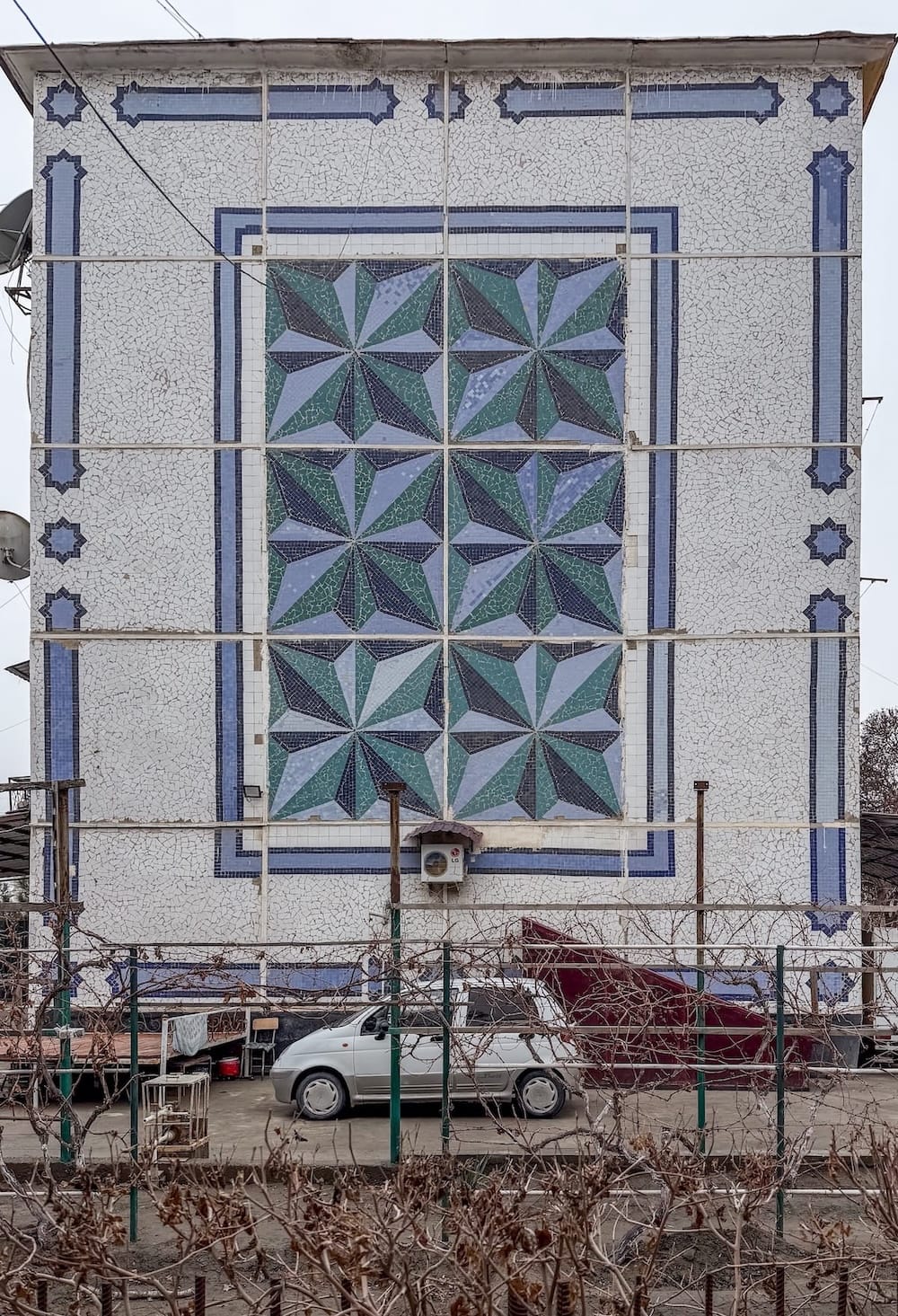
There were a handful of mosaics with Central Asian motifs on them throughout the areas where I walked, and I found the ones I detailed further above. Here are some photos of them:
Map of Soviet-era Monumental Art in Bukhara
How To Use This Map
You can use your fingers/mouse to zoom in and out. To get more info about a place, simply touch/click the icons. Want to save this map for later use? Click the ‘⭐’ by the map title and it will add it to your Google Maps account (Saved > Maps or ‘Your Places’).
Do you know of any other Soviet-era mosaics in Bukhara? Let me know in the comments so I can check them out when I visit the city next! Thanks!
*This site uses affiliate links, meaning that if you make a purchase through my links, I may earn an affiliate commission.
This is so useful, and I know it’s a lot of work to enter all the data, so thank you! One thing I noticed is that for the first Chirchik Cotton Mosaics building, you gave the same coordinates for both ends of the building. I think the north end of the building should be more like 39°45’4.75″N 64°25’53.17″E (per Google Earth). Thank you again!
Oyyyy… I am just seeing this and sorry if I did that (although my brain is too tired to function to change numbers now – it is late in the evening!). I will check it out tomorrow and update – thanks for the tip (and for sending the coordinates haha) :) Enjoy Bukhara!